
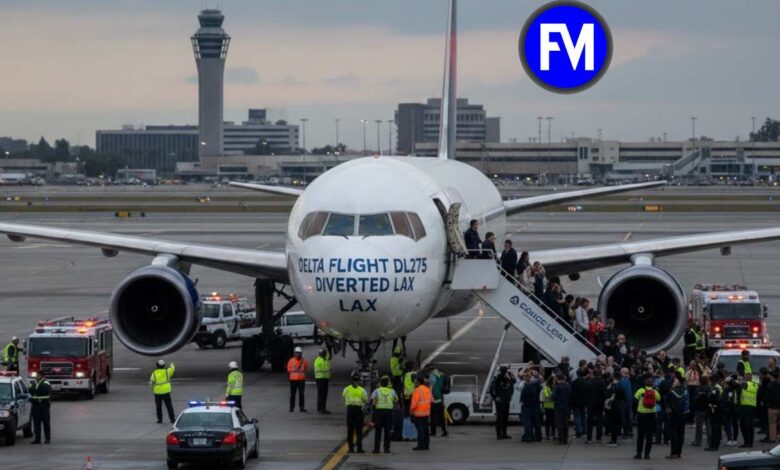
On May 26, 2025, Delta Flight DL275 made an unexpected diversion to Los Angeles International Airport (LAX) while en route from Detroit Metropolitan Wayne County Airport (DTW) to Tokyo Haneda Airport (HND). The Airbus A350-900, a modern long-haul aircraft, was mid-flight when a technical issue prompted the crew to make the crucial decision to divert to LAX. This article delves into the circumstances behind the diversion, the passenger experience, and the safety protocols that guided this decision.
Flight Overview: Delta Flight DL275’s Mission
Delta Flight DL275 is a significant part of Delta Air Lines’ transpacific network, providing a direct connection between the U.S. Midwest (Detroit) and Japan’s capital region (Tokyo). The flight is an essential route for business and leisure travelers, operating daily with the advanced Airbus A350-900.
Aircraft Specifications: Airbus A350-900
The Airbus A350-900, used on Delta Flight DL275, is a state-of-the-art aircraft designed for long-haul flights. It is equipped with:
- Fuel-efficient engines: Ideal for ultra-long-range flights.
- Advanced safety systems: Real-time monitoring of critical components ensures the aircraft’s performance is constantly evaluated.
- Passenger comfort: Features like larger windows, quieter cabins, and better air circulation ensure a comfortable flight experience.
Despite its advanced technology, an unexpected malfunction in the aircraft’s engine anti-ice system triggered the diversion to LAX, as outlined in the following sections.
The Cause of the Diversion: Engine Anti-Ice System Malfunction
Mid-flight, several hours into the journey over the North Pacific, the flight crew noticed an issue with the engine’s anti-ice system. This system plays a vital role in preventing ice accumulation on critical aircraft surfaces, including the engine inlets and wings. In high-altitude, cold-weather conditions, ice can build up, leading to a range of issues, including:
- Reduced engine performance: Ice can obstruct airflow into the engines.
- Aerodynamic inefficiency: Accumulation on the wings may impact flight dynamics.
- Instrument malfunction: Sensors and instrumentation may give incorrect readings due to ice interference.
The malfunction did not immediately pose a danger, but aviation regulations emphasize early action to prevent further complications, especially when flying over remote oceanic regions with few diversion options.
Why LAX Was Chosen for the Diversion
While Alaska may have seemed closer geographically, several factors influenced the decision to divert to Los Angeles rather than a nearer Alaskan airport.
1. Maintenance Capabilities at LAX
LAX, being a major hub for Delta, has the infrastructure to handle advanced aircraft like the Airbus A350-900. It is equipped with certified Airbus technicians who can swiftly address complex technical issues. In contrast, smaller airports in Alaska might not have the necessary equipment or expertise for such a specialized repair.
2. Operational Flexibility
As a primary Delta hub, LAX provided operational advantages, including the coordination of crew schedules, efficient handling of passenger rebooking, and access to a comprehensive range of services for dealing with unforeseen delays.
3. Passenger Comfort and Care
LAX offered robust passenger services, including lodging, meals, and transportation options. The airport’s size and facilities allowed Delta to better manage the needs of passengers during the extended delay and diversion.
Timeline of Events: From Detroit to LAX
1. Departure from Detroit
Delta Flight DL275 began its journey from Detroit with a slight delay, primarily due to the late arrival of the aircraft from a previous international flight. Despite the minor delay, the aircraft departed with all systems functioning within standard parameters.
2. Mid-Flight Issue Detected
Several hours into the flight, while cruising over the North Pacific near the Bering Sea, the crew detected an irregularity in the anti-ice system. As mentioned, this prompted the crew to begin monitoring the situation closely and eventually opt for the safest course of action: diverting the flight to LAX.
3. Diversion Decision and Landing
The flight crew made the decision to divert the aircraft southward to LAX, considering factors like safety, aircraft capabilities, maintenance support, and passenger care. This decision led to an additional 12-hour journey, with the aircraft landing safely at LAX early in the morning.
Passenger Experience: Emotions and Reaccommodation
For passengers aboard Delta Flight DL275, the diversion was an emotionally charged experience. While the technical issue was handled professionally, the unplanned detour resulted in mixed reactions among travelers.
1. Anxiety and Frustration
The announcement of a technical issue mid-flight understandably caused concern among passengers. The uncertainty of the situation, coupled with the extended journey, led to feelings of frustration and discomfort. However, the crew’s clear communication and reassurance helped alleviate some of the anxiety.
2. Relief and Gratitude
Upon safely landing at LAX, many passengers expressed relief, particularly as the crew ensured a smooth disembarkation process. The professionalism demonstrated by both the flight crew and Delta ground staff was appreciated by those affected.
3. Passenger Support at LAX
Delta provided immediate support to its passengers, including:
- Hotel accommodations: For those needing overnight lodging.
- Meals and refreshments: To ease the discomfort of the extended journey.
- Rebooking assistance: Delta staff rebooked travelers on the next available flights to Tokyo or alternative destinations.
Why Safety Comes First: The Importance of Early Diversion
The decision to divert Delta Flight DL275 was grounded in safety protocols. In modern aviation, safety is always prioritized over time schedules. The malfunction of the engine anti-ice system posed a potential risk, and the flight crew took immediate action by declaring an emergency and diverting to the nearest suitable airport.
1. Early Detection and Action
Flight crews are trained to identify and respond to issues early, even if the malfunction is not immediately dangerous. This early intervention is a critical part of aviation safety procedures, ensuring that problems are addressed before they escalate.
2. Emergency Declaration
The emergency declaration made by the flight crew was a precautionary measure, not an indication of immediate danger. It allowed air traffic control to prioritize the flight’s landing and prepared emergency services at LAX for any possible complications.
The Bigger Picture: Aviation Safety and Protocols
Long-haul diversions like the one experienced by Delta Flight DL275 are rare but not unprecedented. They are typically caused by technical failures, adverse weather conditions, or medical emergencies. However, the success of such diversions highlights the importance of:
- Advanced aircraft technology: Modern airplanes like the Airbus A350-900 come equipped with sophisticated systems that help detect and resolve issues early.
- Comprehensive maintenance infrastructure: Major hub airports like LAX are equipped to handle complex repairs and support airline operations during emergencies.
- Safety-focused decision-making: Prioritizing safety ensures that crews and passengers are protected, even if it means a significant detour or delay.
Conclusion: Lessons from Delta Flight DL275’s Diversion
The diversion of Delta Flight DL275 to LAX on May 26, 2025, serves as a prime example of how airlines, crews, and airports work together to ensure passenger safety in the face of unexpected technical issues. The decision to land at LAX was based on a thorough assessment of safety, maintenance capabilities, and passenger care, underscoring the importance of having a robust contingency plan in place for long-haul flights.
For travelers, this incident also serves as a reminder that, while diversions may be inconvenient, they are part of the safety-first protocols that airlines and aviation authorities prioritize to protect everyone onboard.
FAQs
1. Why was Delta Flight DL275 diverted to LAX?
The flight was diverted due to a malfunction in the aircraft’s engine anti-ice system, which required prompt attention to ensure the safety of the aircraft and passengers.
2. Was the situation dangerous for passengers on Delta Flight DL275?
No, while the technical issue was serious, the situation was handled professionally by the flight crew, and there was no immediate danger to passengers.
3. How did Delta assist passengers after the diversion?
Delta provided accommodation, meals, and rebooking assistance to affected passengers, ensuring minimal disruption to their travel plans.
4. Could the aircraft have landed in Alaska instead of LAX?
While Alaska was closer, LAX was chosen due to its superior maintenance capabilities and operational flexibility, ensuring a safe and efficient response to the technical issue.
5. What are the safety protocols for aircraft diversions?
Aviation safety protocols prioritize early detection of issues, emergency declarations, and the selection of airports equipped to handle technical malfunctions and ensure passenger safety.
For More Updates Visit: Fortune Magazine