

Susan Silverman is an American-Israeli rabbi, author, and adoption advocate who has built a meaningful public life beyond her connection to comedian Sarah Silverman. As Sarah’s older sister, Susan offers a different perspective on the family’s Jewish identity, approaching questions of faith and social responsibility through religion and activism. Her journey from a largely secular Jewish upbringing to becoming a Reform rabbi is a central part of her personal story. She has also devoted considerable attention to adoption, family life, and advocating for women’s religious rights in Jerusalem. Through her memoir Casting Lots: Creating a Family in a Beautiful, Broken World, she shared personal reflections on parenthood, uncertainty, and the experiences that shaped her beliefs. Although her sister is famous for provocative comedy, Susan has developed her own voice as a religious leader and advocate for vulnerable children. Her story brings together family, faith, and activism while revealing a side of the Silverman family that audiences may not know as well.
Quick Bio
| Detail | Information |
|---|---|
| Full Name | Susan Silverman |
| Known For | Religious leadership, writing, adoption advocacy, and activism |
| Famous Connection | Sarah Silverman |
| Relationship | Older sister |
| Profession | Rabbi, author, and activist |
| Birth Date | May 10, 1963, as reported in biographical sources; authoritative confirmation is limited |
| Birthplace | New Hampshire, United States |
| Nationality | American-Israeli |
| Husband | Yosef Abramowitz |
| Children | Five |
| Education | Boston University, College of Arts and Sciences; graduated in 1985 |
| Religious Background | Reform Judaism |
| Notable Book | Casting Lots: Creating a Family in a Beautiful, Broken World |
| Advocacy | Adoption and women’s religious rights |
| Residence | Has been publicly reported living in Jerusalem, Israel |
| Famous Sibling | Sarah Silverman, comedian and actress |
Who Is Susan Silverman?
Susan Silverman is a rabbi, writer, and adoption advocate whose work focuses on Jewish identity, family, and social responsibility. While her relationship with comedian Sarah Silverman often introduces her to a wider audience, her own career developed around religious education, community leadership, and activism.
Silverman grew up in New Hampshire in a family that identified culturally as Jewish but did not emphasize religious observance. Her eventual decision to become a rabbi represented a significant personal direction, taking her toward a life centered on Jewish teachings, community engagement, and questions of meaning.
Her professional interests have extended beyond the synagogue. She has written about Jewish family life, worked to encourage adoption, and supported efforts to expand women’s participation in Jewish religious practices at the Western Wall in Jerusalem.
Susan is also a mother of five children, including two sons adopted from Ethiopia with her husband, Yosef Abramowitz. Her experiences as a parent and advocate became central themes in her memoir, which explores the relationship between personal uncertainty, family, and faith.
Growing Up in the Silverman Family
Susan grew up with her sisters in a predominantly Christian community in New Hampshire. Her parents, Donald Silverman and Beth Ann Silverman, were politically progressive and raised their children in a household where Jewish identity was present but formal religious practice was limited.
The family environment encouraged discussion and independent thinking. Susan and her sisters eventually followed different professional paths, with Susan entering religious leadership, Sarah becoming a comedian and actress, and Laura Silverman pursuing acting.
The family also experienced a profound loss when Susan’s infant brother, Jeffrey, died during her early childhood. Susan later discussed how this event and the uncertainty surrounding loss influenced her understanding of fear, family, and the need to find meaning in difficult experiences.
She wrote about these themes in her memoir and discussed them in interviews. Her account shows how personal history can shape the questions someone asks about faith without necessarily determining a single answer.
From a Secular Upbringing to Becoming a Rabbi
One of the defining aspects of Susan Silverman’s life is her decision to pursue religious leadership despite growing up in a largely secular household.
Her path was not simply a continuation of an established family tradition. Instead, she developed a deeper engagement with Judaism as she explored its teachings, community practices, and possibilities for responding to life’s uncertainties.
Silverman studied at Boston University, graduating in 1985 from its College of Arts and Sciences. She subsequently pursued rabbinical training and became a Reform rabbi, eventually working in Jewish education and congregational life.
Her professional experience included serving a congregation in Maryland and working as a Jewish educator in the Boston area. These roles allowed her to combine religious study with practical community engagement.
Her journey also helps explain why her public identity differs so sharply from Sarah’s. Both sisters have spoken about Jewish identity, but Susan has pursued those questions through religious practice and advocacy, while Sarah has often approached them through comedy and cultural commentary.
Susan Silverman’s Career in Jewish Education
Before becoming widely recognized as an adoption advocate, Susan worked in Jewish education and congregational settings. These roles involved helping people engage with Jewish traditions, community life, and the values associated with religious practice.
Her work reflected an understanding of Judaism as something that could inform everyday decisions rather than remain limited to ceremonies or formal study. Family relationships, moral responsibility, and social concerns became recurring themes in her public discussions.
Susan also contributed to Jewish educational publishing. In 1997, she and her husband, Yosef Abramowitz, co-authored Jewish Family & Life: Traditions, Holidays, and Values for Today’s Parents and Children.
The book addressed Jewish traditions and family practices, making religious and cultural material accessible to parents and children. It reflected the couple’s shared interest in helping families connect with Jewish life.
Her work as an educator and author established a professional identity that existed independently of her sister’s entertainment career.
Why Susan Silverman Moved to Israel
Susan moved to Israel in 2006 with her family and eventually became associated with life in Jerusalem. The move represented an important change from her earlier professional life in the United States.
Her decision was connected to a desire to participate more directly in Jewish communal life and raise her children in Israel. In interviews, she has described the experience in terms of belonging, cultural identity, and the opportunity to take part in the country’s development.
Living in Israel also placed her closer to religious and political debates that would become relevant to her activism, particularly questions about women’s rights at Jewish holy sites.
Her relocation should not be understood as a complete break from her American background. Susan continued to speak publicly about her upbringing, family relationships, and experiences in the United States, while building a life in a different national and cultural setting.
Susan Silverman and Her Adoption Advocacy
Adoption has become one of the most significant causes associated with Susan Silverman. Her interest in the subject began long before she adopted children herself.
In interviews, she has recalled wanting to adopt children from a young age. That interest eventually became a central part of her family life and her public advocacy.
Susan and her husband adopted two sons from Ethiopia, adding to their family of five children. She has spoken about adoption as a commitment to children who need permanent, loving homes rather than simply as a private decision about how to build a family.
Her work also included establishing SecondNurture, an initiative intended to encourage adoption and promote a culture in which children without permanent families can find supportive homes.
Her approach links individual family decisions to broader questions about how communities respond to children in vulnerable circumstances. Instead of treating adoption only as a personal experience, she has advocated for greater public awareness and a stronger commitment to helping children.
The details of adoption can be complex, involving children’s needs, family circumstances, and legal processes. Susan’s public work has focused on the broader responsibility of creating safe and supportive family environments.
The Story Behind Casting Lots
Susan Silverman’s memoir, Casting Lots: Creating a Family in a Beautiful, Broken World, offers one of the clearest accounts of her personal philosophy.
Published in 2016, the book explores the relationship between family, faith, adoption, and the uncertainty that accompanies everyday life. It draws on her experiences growing up, becoming a mother, and developing a deeper relationship with Judaism.
The memoir also addresses the death of her infant brother, an event that occurred when she was very young. Susan has discussed how the loss became part of her family’s history and influenced the way she thought about the possibility of losing people she loved.
Rather than presenting religious belief as a guarantee against hardship, her writing considers how faith can help people live with questions that cannot always be resolved.
Adoption provides another central thread. Her account reflects the practical and emotional dimensions of creating a family while recognizing that life rarely unfolds according to a completely predictable plan.
The book is valuable because it allows readers to encounter Susan in her own words, rather than knowing her exclusively through her relationship with Sarah.
Susan Silverman’s Activism at the Western Wall
Another important part of Susan’s public life is her involvement with Women of the Wall, an organization advocating for women’s rights to pray at the Western Wall in Jerusalem.
The Western Wall is one of Judaism’s most significant religious sites. Disagreements over prayer practices there have included questions about whether women may wear prayer shawls, pray aloud, and read from the Torah in ways associated with particular Jewish traditions.
Susan has supported efforts to expand women’s participation in religious practice at the site. Her activism reflects her interest in the relationship between religious tradition, equality, and public life.
In 2012, Susan and her daughter Hallel were arrested after participating in prayer at the Western Wall while wearing prayer shawls. The incident attracted wider attention and became part of the continuing debate over women’s religious rights at the site.
The event also connected her activism to her family life. Her daughter participated alongside her, demonstrating that questions about religious practice were not simply abstract issues for Susan but matters that could affect how members of her family expressed their faith.
Her involvement in Women of the Wall illustrates a form of activism grounded in religious practice itself. Rather than abandoning tradition, the movement seeks greater access and participation within Jewish religious life.
Who Is Sarah Silverman?
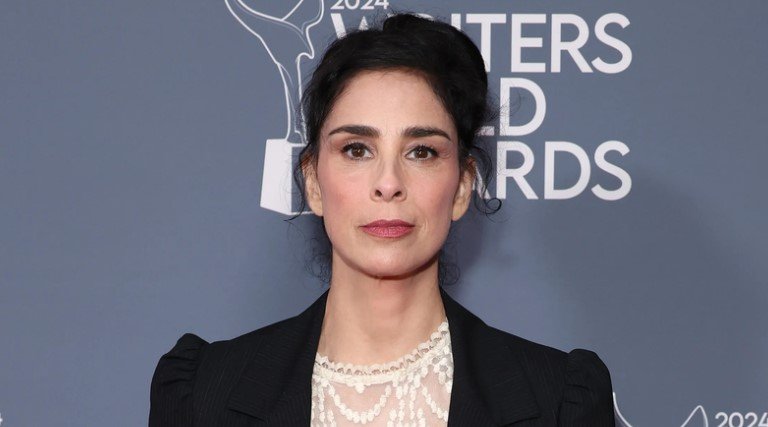
Sarah Silverman is an American comedian, actress, writer, and producer known for her provocative humor, social commentary, and willingness to address subjects that other comedians may avoid.
She gained early national exposure as a cast member and writer on Saturday Night Live in the early 1990s. Her later work included stand-up comedy, the film Jesus Is Magic, and the television series The Sarah Silverman Program.
Sarah has also appeared in films and television productions and has earned recognition for her work as a comedian and actor. Her comedy frequently draws on religion, politics, cultural identity, and personal experience.
Her connection with Susan is significant because the sisters represent different ways of engaging with some of the same questions. Sarah’s public persona is built around irreverence, while Susan’s work emphasizes religious tradition, family, and activism.
Despite their different professional directions, the sisters have appeared together to discuss Jewish identity and their upbringing. Their conversations reveal a relationship that extends beyond the contrast between a famous comedian and her rabbi sister.
Susan and Sarah Silverman: Two Different Approaches to Jewish Identity
The differences between Susan and Sarah have often attracted attention because their careers seem to occupy opposite ends of the religious spectrum.
Susan became a Reform rabbi and has made Jewish practice central to her professional and personal life. Sarah, meanwhile, is known for comedy that frequently challenges religious conventions and social taboos.
Yet their public conversations suggest that the contrast is more complicated than a simple division between religious belief and irreverence.
In a 2011 discussion hosted at Boston University, the sisters spoke about their shared upbringing and what Jewish identity meant to them. Their exchange combined humor with thoughtful reflections on family and culture.
Susan has described the sisters as approaching important questions through different frameworks. Her perspective suggests that comedy and religious practice can sometimes express related concerns, even when their language and methods are very different.
Their relationship is therefore interesting not because one sister is famous and the other is a rabbi, but because they have developed distinct ways of interpreting their shared background.
Their Public Conversations and Mutual Support
Susan and Sarah have appeared together at public events where they discussed Judaism, family, and their differing professional lives.
These conversations have allowed audiences to see their relationship directly rather than relying solely on descriptions in celebrity profiles. Their exchanges have included teasing, affection, and serious discussion about cultural identity.
Sarah has also publicly expressed support for Susan’s activism. Susan’s work at the Western Wall, for example, received wider attention when Sarah spoke about the issue on social media.
Such moments show how their respective public platforms can overlap. Sarah’s entertainment following can draw attention to causes associated with Susan, while Susan’s religious experience can add another perspective to conversations about Jewish identity.
There is no need to assume that the sisters agree on every issue to recognize the importance of their relationship. Their public interactions show that family connections can remain meaningful even when individuals develop markedly different careers and worldviews.
Susan Silverman’s Husband and Five Children
Susan is married to Yosef Abramowitz, an entrepreneur known for his work in renewable energy and environmental advocacy. Together, they have five children, including two sons adopted from Ethiopia.
Family life is central to Susan’s writing and advocacy. Her experience raising children has informed her interest in adoption, Jewish education, and the responsibility adults have toward younger generations.
The couple’s children have grown up within a family shaped by both Jewish traditions and an international background. Susan has discussed the role of family rituals, including Shabbat, in providing a shared structure for family life.
She has also spoken about the challenges of parenting while living with uncertainty. Her memoir connects these experiences to broader questions about how parents protect children while recognizing that no family can control every aspect of life.
Although Susan has shared meaningful details about her family in interviews and writing, she does not make every aspect of their private lives public. A responsible account should therefore distinguish what she has chosen to discuss from information that remains personal.
Susan Silverman’s Net Worth and Financial Life
Susan Silverman’s current personal net worth is not reliably established through authoritative public financial disclosures.
Her professional activities have included religious leadership, writing, educational work, and advocacy. These roles provide a picture of her career, but they do not establish the total value of her assets, income, investments, or other financial interests.
Book sales, organizational funding, and her husband’s business activities should not automatically be treated as Susan’s personal wealth. In particular, the finances of an advocacy organization are distinct from the personal finances of the people involved in its work.
For that reason, precise net-worth estimates published without transparent financial evidence should be treated cautiously.
Her public legacy is more clearly documented through her writing, religious work, and adoption advocacy than through financial figures.
What Is Susan Silverman Doing Today?
Susan Silverman’s public identity remains associated with Jewish life, family, and advocacy. Her work has connected religious education with wider discussions about adoption, women’s participation in religious practice, and the meaning of community responsibility.
She has continued to be known through her memoir and interviews, which provide insight into her personal experiences and beliefs. Her relationship with Sarah Silverman also remains a point of public interest, particularly when the sisters discuss Jewish identity or appear together.
However, a complete account of her current employment, organizational responsibilities, and daily activities is not consistently available in public sources. It would be inaccurate to assume that every role she held in earlier years remains unchanged.
What can be said with confidence is that her public story extends well beyond celebrity family connections. Her work has addressed practical questions about how people build families, sustain religious communities, and respond to children and adults who need support.
Conclusion
Susan Silverman has developed a distinctive life as a rabbi, author, mother, and adoption advocate. Although many readers discover her through her famous younger sister, Sarah Silverman, her own career has been shaped by religious education, family experiences, and a commitment to social action.
Her transition from a largely secular Jewish upbringing to religious leadership demonstrates how personal beliefs can develop over time. Her adoption advocacy, memoir, and involvement with Women of the Wall further reveal the causes that have shaped her public work.
The relationship between Susan and Sarah adds another dimension to her story. Their different approaches to Jewish identity have provided opportunities for thoughtful and often humorous conversations about shared family history.
Ultimately, Susan Silverman’s story is not simply that of a comedian’s sister. It is the story of a woman who has used her professional experience and personal convictions to engage with questions of faith, family, and responsibility toward others.
FAQs
Who is Susan Silverman?
Susan Silverman is an American-Israeli rabbi, author, and adoption advocate. She is also the older sister of comedian and actress Sarah Silverman and has worked in Jewish education and religious activism.
How is Susan Silverman related to Sarah Silverman?
Susan Silverman is Sarah Silverman’s older sister. They grew up in the same family in New Hampshire but developed different professional paths, with Susan becoming a rabbi and Sarah pursuing comedy and acting.
Is Susan Silverman a rabbi?
Yes. Susan Silverman trained as a Reform rabbi and worked in congregational and Jewish educational settings. Her public work has also included adoption advocacy and support for women’s religious rights.
Who is Susan Silverman’s husband?
Susan Silverman is married to Yosef Abramowitz, an entrepreneur associated with renewable energy and environmental advocacy. Together, they have five children, including two sons adopted from Ethiopia.
How many children does Susan Silverman have?
Susan Silverman has five children with her husband, Yosef Abramowitz. Three are daughters, and two sons were adopted from Ethiopia.
What is Susan Silverman known for besides being Sarah Silverman’s sister?
Susan is known for her work as a rabbi, her writing, adoption advocacy, and involvement with Women of the Wall. She also co-authored a book about Jewish family traditions and wrote the memoir Casting Lots.
What is Susan Silverman’s net worth?
Susan Silverman’s exact net worth has not been reliably established through authoritative public financial information. Her career includes religious leadership, writing, and advocacy, but those activities do not provide enough evidence to calculate her personal wealth.
For More Updates Visit: Fortune Magazine