The mechanical pencil has quietly reclaimed its place in modern work and creative life. Once relegated to drafting tables and engineering firms, it’s now carried daily by designers, writers, students, and anyone who values precision without pretense. Unlike disposable pens or wooden pencils that dull with use, the mechanical pencil delivers consistent performance—no sharpening, no interruptions, just reliable marks on paper.
This resurgence isn’t nostalgia. It reflects a broader shift toward intentional tool selection: choosing objects that work well, last longer, and reduce waste. In an era dominated by touchscreens and cloud documents, the tactile satisfaction of a well-made writing instrument still resonates. This article explores why mechanical pencils have endured, how they’ve evolved, and what makes them indispensable across technical fields, creative disciplines, and everyday carry kits.
From Patent Drawings to Everyday Carry: A Brief History
The mechanical pencil’s origins trace back to the late 18th century, when inventors sought to eliminate the tedious ritual of sharpening. Early prototypes were crude—spring-loaded tubes that advanced graphite rods through friction or manual adjustment. But the concept proved sound, and by the mid-1800s, more refined designs emerged, including twist mechanisms and replaceable lead cartridges.
The real breakthrough came in the 20th century with the introduction of clutch and ratchet-based advancement systems, which allowed users to extend lead incrementally with a simple click. Japanese manufacturers like Pentel and Pilot refined these mechanisms further, producing pencils that balanced durability with precision. By the 1960s, mechanical pencils had become standard equipment in architecture studios and engineering departments worldwide.
Today’s models inherit that legacy while incorporating modern materials—aluminum bodies, knurled grips, and retractable tips that protect pockets and bags. The mechanical pencil has evolved from a specialized drafting tool into a versatile everyday carry item, valued as much for its reliability as its understated elegance.
Why Mechanical Pencils Outperform Traditional Alternatives
The advantages of mechanical pencils extend beyond convenience. For anyone who writes, sketches, or annotates regularly, they offer tangible benefits that wooden pencils and disposable pens can’t match:
- Consistent line width: The lead diameter remains constant, eliminating the variable thickness that comes with dulling points. This consistency matters for technical drawings, detailed sketches, and legible note-taking.
- No sharpening required: A quick click advances fresh lead, maintaining workflow without interruption. This seemingly minor feature saves cumulative hours over months of use.
- Durability and longevity: Quality mechanical pencils are built from metal or reinforced resin, designed to withstand years of daily use. Unlike wooden pencils that shrink with each sharpening, a mechanical pencil’s body remains intact indefinitely.
- Customizable lead options: Users can select from various lead grades (HB, 2B, 4H) and diameters (0.3mm to 0.9mm) to suit specific tasks, from fine technical work to bold sketching.
- Reduced waste: Refillable lead cartridges generate far less material waste than disposable wooden pencils or single-use pens, aligning with sustainable consumption practices.
These practical advantages explain why mechanical pencils remain standard equipment in professions where precision and efficiency matter.
Design Meets Function: Contemporary Mechanical Pencils
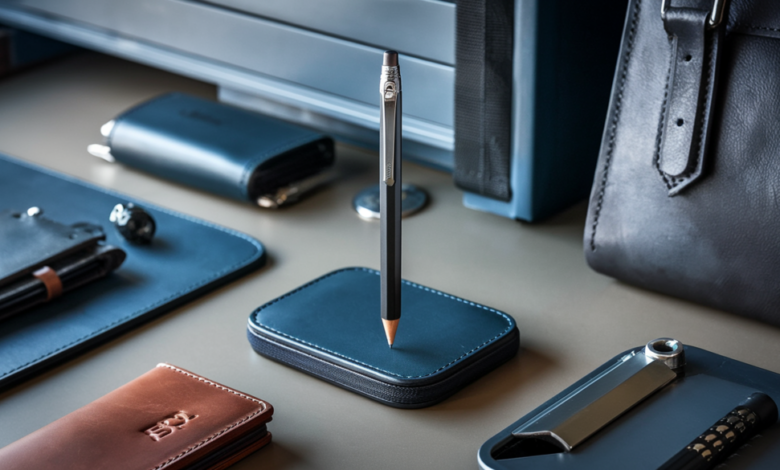
Modern mechanical pencils span a wide aesthetic and functional range, from minimalist everyday writers to statement pieces that double as desk accessories. This diversity reflects growing consumer interest in tools that perform well while expressing personal style.
Key features that distinguish contemporary models include:
- Material innovation: Manufacturers now use titanium, brass, and carbon fiber alongside traditional plastics, creating pencils that age gracefully and develop unique patinas over time.
- Ergonomic refinement: Contoured grips, balanced weight distribution, and textured surfaces reduce hand fatigue during extended use, making these pencils suitable for marathon writing or drawing sessions.
- Modular components: Some designs allow users to swap grips, clips, and even lead advancement mechanisms, extending the pencil’s lifespan and adapting it to changing needs.
- Limited editions and collaborations: Brands increasingly partner with designers and artists to produce distinctive models that appeal to collectors and enthusiasts who view writing instruments as functional art.
Brands offering mechanical pencils with premium materials and ergonomic refinement include Everyman, rOtring, and options at JetPens. Comparing material options—titanium, brass, or aluminum—and how they develop patina over time helps identify pencils that match both your grip preference and aesthetic sensibility.
Precision Tools for Technical Work
In engineering, architecture, and technical illustration, the mechanical pencil isn’t just preferred—it’s often required. The demands of these fields expose the limitations of other writing instruments and highlight why mechanical pencils remain irreplaceable.
Technical professionals rely on mechanical pencils for several critical reasons:
- Unwavering line consistency: Blueprints, schematics, and technical drawings require uniform line weights. A 0.5mm mechanical pencil produces the same mark from first stroke to last, ensuring clarity and professionalism.
- Immediate readiness: No sharpening means no interruption mid-calculation or mid-sketch. The pencil is always ready when inspiration or problem-solving demands it.
- Lead grade versatility: Different tasks call for different lead hardness. Engineers might use 2H for precise layouts and HB for general notation, switching between pencils or lead cartridges as needed.
- Professional durability: Job sites and studios are tough environments. Metal-bodied mechanical pencils withstand drops, pocket carry, and daily handling that would destroy wooden pencils or cheap pens.
The ergonomic demands of technical drawing have also influenced mechanical pencil design, with manufacturers developing grips and weight distributions that reduce strain during prolonged, detailed work. This attention to user comfort reflects decades of feedback from professionals who spend hours daily with a pencil in hand.
Comfort and Sustainability: The Overlooked Benefits
Beyond performance metrics, mechanical pencils offer two significant advantages that resonate with contemporary values: ergonomic comfort and environmental responsibility.
Ergonomic Design for Extended Use
Hand fatigue and discomfort plague anyone who writes or draws for extended periods. Mechanical pencils address this through thoughtful design elements:
- Cushioned grips: Soft rubber or silicone sections absorb pressure and prevent the calluses and soreness associated with hard plastic or wood.
- Balanced weight distribution: Properly weighted pencils reduce the grip force needed to control the tool, minimizing muscle strain in the hand and forearm.
- Appropriate diameter: Barrel thickness affects comfort significantly. Most quality mechanical pencils maintain a diameter that suits average adult hands without requiring excessive finger spread or cramped gripping.
Environmental Advantages
The sustainability case for mechanical pencils is straightforward but compelling:
- Minimal waste generation: A single mechanical pencil body can last decades, requiring only periodic lead refills. This contrasts sharply with wooden pencils that become unusable stubs or disposable pens discarded after ink depletion.
- Resource efficiency: Manufacturing one durable mechanical pencil consumes fewer materials over its lifetime than producing the dozens of wooden pencils or pens it replaces.
- Reduced packaging waste: Lead refills come in compact containers, generating far less packaging waste than individually wrapped disposable writing instruments.
- Longevity culture: Choosing a mechanical pencil represents a shift away from disposable consumer culture toward investing in quality tools designed for long-term use and repair.
These environmental benefits align with broader sustainability initiatives in manufacturing and consumer goods, as companies increasingly recognize the value of circular economy principles that prioritize durability and reuse over planned obsolescence.