
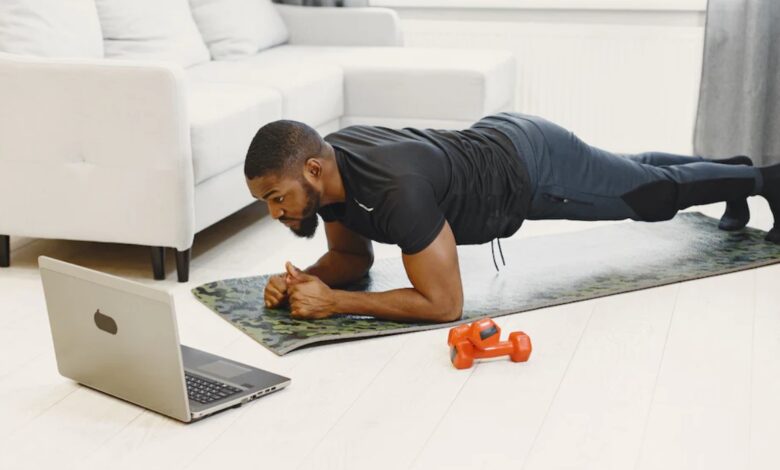
You’re busy. Meetings run long, commutes steal time, and by the time the day ends, the idea of a full workout feels unrealistic. Here’s the thing: you don’t need an hour. You need a plan that fits real life and still moves the needle.
This 20-minute home workout is built for busy professionals who want strength, mobility, and energy without equipment or complicated routines. It’s short, structured, and repeatable. Do it in your living room, in office clothes if you must, and still count it as a win.
Before we begin: if you have a medical condition, recent injury, or severe joint issues, adjust accordingly. Mild discomfort is okay. Sharp pain is not.
Why 20 Minutes Works
Most people quit because they aim too big. A 20-minute session is easier to start and easier to stay consistent with. Consistency beats intensity when your schedule is unpredictable.
This routine improves:
- full-body strength
- core stability
- posture and mobility
- stress release
- daily energy
It’s also designed to reduce the common “desk-body” problems: tight hips, rounded shoulders, stiff upper back, and low back fatigue.
What You Need
- A mat or towel (optional)
- A chair or sofa edge
- A bottle of water
- A timer
No dumbbells required. If you want extra intensity later, add a backpack with books.
Structure of the Workout (20 Minutes Total)
1) Warm-up and mobility: 3 minutes
2) Strength circuit: 12 minutes
3) Core finisher: 3 minutes
4) Cool-down stretch: 2 minutes
Simple. No overthinking. Let’s go.
1) Warm-up and Mobility (3 Minutes)
Move continuously. Keep breathing.
A. March in place + arm swings (60 seconds)
Bring your knees up lightly. Swing your arms forward and back. This wakes up circulation and loosens shoulders.
B. Shoulder rolls + chest opener (60 seconds)
Roll shoulders back 10 times, then forward 10 times. After that, clasp hands behind your back and gently open your chest for 15 to 20 seconds.
If you work on a laptop all day, this matters more than you think.
C. Hip hinge and reach (60 seconds)
Stand tall, hinge at hips like you’re closing a car door with your hips, then stand and reach arms overhead. Repeat slowly.
2) Strength Circuit (12 Minutes)
You’ll do 4 moves, repeated for 3 rounds.
Timing:
Work 40 seconds, rest 20 seconds per move.
After one round, rest 30 seconds and repeat.
Move 1: Squats (40 seconds)
Feet shoulder-width apart. Sit back like you’re lowering onto a chair. Stand up strong.
Make it easier: smaller range of motion.
Make it harder: squat pulse for the last 10 seconds.
Move 2: Incline push-ups (40 seconds)
Hands on a chair, sofa, or counter. Keep body straight. Lower slowly, push up strong.
If regular push-ups hurt your wrists or shoulders, incline is a safer option.
Move 3: Reverse lunges (40 seconds)
Step one leg back, lower gently, push back up. Alternate legs.
Tip: keep your front knee tracking over your toes, not collapsing inward.
Move 4: Wall sit or glute bridge (40 seconds)
Pick one based on how your knees feel.
- Wall sit: back against wall, knees bent, hold steady.
- Glute bridge: lie down, feet planted, lift hips and squeeze glutes.
Both are excellent for lower body without jumping.
Repeat the circuit 3 rounds.
3) Core Finisher (3 Minutes)
This isn’t about getting abs. It’s about protecting your spine, improving posture, and making your body feel stable.
A. Dead bug (60 seconds)
Lie on your back, knees up, arms up. Extend opposite arm and leg slowly, return, switch.
B. Plank (60 seconds)
Forearms down, body straight. Tighten glutes, pull ribs down slightly, breathe.
Modify: plank on knees.
If wrists hurt: forearm plank is best.
C. Standing side crunch (60 seconds)
Stand tall, hands behind head, bring elbow toward same-side knee. Alternate sides.
This adds a little cardio while engaging the obliques.
4) Cool-down Stretch (2 Minutes)
A. Upper back stretch (45 seconds)
Clasp hands in front, push away, round upper back slightly. Breathe.
B. Hip flexor stretch (45 seconds)
Step one leg back into a short lunge. Tuck hips slightly. You’ll feel the front of the back hip open up.
C. Neck and shoulder release (30 seconds)
Tilt ear toward shoulder gently, switch sides.
How to Make This a Habit When Work Gets Crazy
Here’s what actually works for busy professionals:
Anchor it to something you already do
Example:
- right after brushing teeth in the morning
- right after you shut your laptop in the evening
- in between two meetings as a reset break
When the workout becomes a routine trigger, you stop relying on motivation.
Keep the barrier low
Don’t wait for perfect clothes, perfect time, or perfect energy. Start with one round. Often, once you begin, you finish.
This is where the idea of reset life becomes practical. You’re not waiting for a Monday, a new month, or a dramatic transformation. You’re resetting your day in real time, in 20 minutes.
What About Shoulder and Back Discomfort?
If you sit for long hours, shoulder tightness is common. Two things help:
- the warm-up shoulder mobility
- incline push-ups instead of heavy overhead work
If your shoulders feel irritated, avoid fast repetitions and keep movements controlled.
Also, if you’re dealing with persistent discomfort and you’re tempted to rely on a shoulder pain tablet, treat that as a signal, not a solution. Pain relief might mask symptoms, but it won’t fix the underlying tightness, weakness, or posture patterns that caused the pain.
The better approach is:
- improve upper back mobility
- strengthen mid-back muscles
- adjust your desk setup if possible
- take micro breaks every 60 to 90 minutes
If pain is sharp, radiating, or linked to numbness or weakness, get medical advice.
Sleep, Recovery, and Why Your Workout Might Not “Work” Without It
A 20-minute workout is powerful, but recovery is what makes it stick.
If you’re sleeping poorly, your body feels heavier, cravings rise, and consistency drops. Some people use sleep gummies as part of their wind-down routine. If that helps you build a consistent sleep schedule, great. Just keep expectations realistic and don’t ignore bigger issues like stress, caffeine timing, screen exposure, or late-night work.
A simple recovery routine looks like this:
- stop caffeine 6 to 8 hours before bed
- dim screens 45 minutes before sleep
- light stretching or breathing for 5 minutes
- sleep at the same time most days
That’s the foundation.
Weekly Plan for Busy Professionals
If you want a clean structure:
- 3 days/week: this 20-minute full-body workout
- 2 days/week: 20-minute walk or mobility session
- 1 day/week: complete rest or light stretching
- 1 day/week: optional fun activity (dance, sports, yoga)
This keeps you active without burning you out.
Final Thought
You don’t need to overhaul your entire schedule to get fitter. You need a system that respects your time and still builds momentum. Do this workout three times a week for a month. You’ll feel stronger, looser, and more in control of your body.