
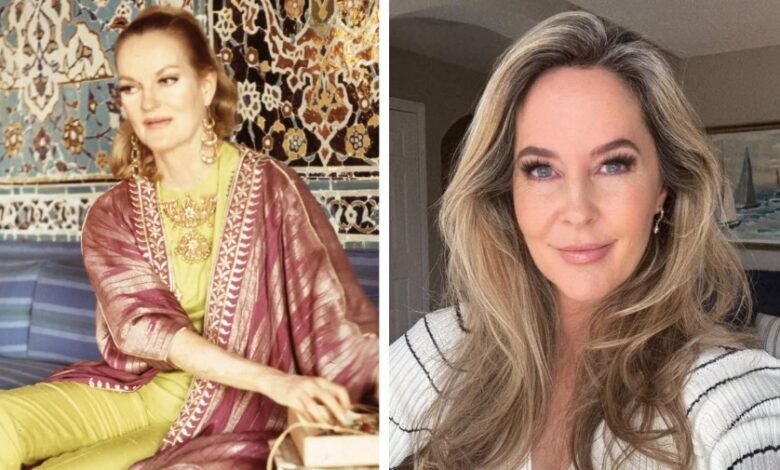
Chandi Heffner became a public figure through one of the most unusual family stories surrounding American heiress Doris Duke. In 1988, Duke legally adopted the 35-year-old Heffner as an adult, creating a mother-daughter relationship that would later become deeply complicated. Heffner had entered Duke’s world through Hawaii, spirituality, and a shared interest in dance before their relationship became much closer. The adoption initially appeared to establish Heffner as Duke’s daughter and potential heir, but the relationship deteriorated within a few years. After Duke died in 1993, Heffner became involved in a major legal battle over the billionaire’s estate and an older family trust. The dispute ultimately ended with a reported $65 million settlement in 1995. Yet Chandi Heffner’s story remains significant not simply because of the money, but because of the extraordinary adoption and complicated personal connection that preceded it.
Quick Bio
| Detail | Information |
|---|---|
| Full Name | Charlene Gail Heffner |
| Known As | Chandi Heffner; Chandi Duke Heffner |
| Known For | Adult adoption by Doris Duke and the subsequent inheritance litigation |
| Famous Connection | Doris Duke |
| Relationship | Adopted daughter |
| Adoption Date | November 10, 1988 |
| Age at Adoption | 35 |
| Birth Date | August 26, 1953, according to a 1994 Vanity Fair profile |
| Birthplace | Baltimore, Maryland, according to the same profile |
| Nationality | American |
| Profession | Reliable current professional information is limited |
| Education | Reported to have graduated from Notre Dame Preparatory School in 1971 |
| Children | Not reliably documented in authoritative public sources |
| Current/Public Status | Limited reliable public information is available about her present-day life |
The New Jersey court record identifies her birth name as Charlene Gail Heffner and confirms that Doris Duke legally adopted her as an adult in 1988. Her birth date, childhood background, and education were reported in a contemporary Vanity Fair profile, but these personal details are less consistently documented in official records.
Who Is Chandi Heffner?
Chandi Heffner is an American woman whose name became closely associated with Doris Duke, one of the wealthiest and most recognizable American heiresses of the 20th century. Unlike Duke, Heffner did not build a public career around business or philanthropy. Her prominence largely came from the extraordinary circumstances of her relationship with Duke, including an adult adoption, an eventual estrangement, and years of estate litigation.
Court documents establish that Heffner was 35 when Duke, then 75, legally adopted her under New Jersey’s adult-adoption law on November 10, 1988. The adoption later became important in a dispute over whether Heffner qualified as a “lineal descendant” under a trust created by Duke’s father, James B. Duke, decades earlier.
Chandi Heffner’s Early Life
Contemporary reporting provides considerably more information about Heffner’s early life than is available today. Vanity Fair reported that she was born Charlene Heffner in Baltimore in 1953 and grew up near Towson, Maryland. The publication described her as the eldest of three daughters of William Heffner, a lawyer, and his wife, who worked as a nurse. It also reported that she attended Notre Dame Preparatory School and graduated in 1971.
Her early adulthood took her far away from the conventional path associated with her family background. She eventually traveled extensively and settled in Hawaii, where she became involved with spiritual communities, meditation, surfing, and the care and training of polo horses. Contemporary accounts also identified her with the Hare Krishna movement during this period.
That Hawaiian chapter was crucial because it eventually brought Heffner into the orbit of Doris Duke.
How Chandi Heffner Met Doris Duke
Heffner and Duke met in Hawaii during the 1980s. Contemporary accounts connect their introduction to the social and artistic circles surrounding Middle Eastern dance. Heffner had become involved in that world while living in Hawaii, and her connection with people around Duke eventually led to a much closer relationship with the heiress.
The relationship developed beyond an ordinary friendship. Duke, who had lost her only biological child, Arden, shortly after the child’s birth in 1940, developed a powerful maternal connection with Heffner. Some contemporary accounts reported that Duke believed Heffner was spiritually connected to Arden or represented her reincarnation. That belief has become one of the most frequently discussed aspects of their unusual relationship, although it should be understood as Duke’s personal belief rather than an objectively established fact.
The 1988 Adult Adoption
The defining moment in Heffner’s relationship with Duke came in November 1988, when Duke legally adopted her.
The circumstances were unusual because this was an adult adoption, not the adoption of a child. The New Jersey court record states that Heffner was 35 and Duke was 75 when the adoption took place. Legally, the adoption created a formal parent-child relationship between the two women.
The adoption also carried major potential financial consequences because of the structure of trusts established by Duke’s father. After Duke’s death, the interpretation of those trusts became central to the litigation surrounding Heffner.
Life With Doris Duke
For a period, Heffner occupied a remarkably close position within Duke’s private world. Contemporary accounts described her traveling with Duke and spending substantial time around the heiress’s homes and activities.
Duke also reportedly purchased property in Hawaii for Heffner before their relationship deteriorated. Vanity Fair described Heffner as living on a large Hawaii ranch that Duke had purchased for her.
Heffner’s presence in Duke’s life also became connected to other people who later played roles in the heiress’s household. Among them was Bernard Lafferty, who eventually became Duke’s butler and a central figure in the complicated final years of her life.
The closeness between Duke and Heffner, however, did not last.
The Breakdown of the Mother-Daughter Relationship
By around 1991, the relationship between Duke and Heffner had ended abruptly. The Washington Post reported after Duke’s death that the relationship had broken down in 1991, while the Los Angeles Times similarly described Heffner as having been removed from Duke’s will following their falling-out.
The exact reasons for the deterioration have been described differently in contemporary accounts, and it is important not to turn allegations or interpretations into established fact. What is clear from the public record is that Duke and Heffner became estranged and that Heffner subsequently pursued legal claims connected to their relationship.
Duke’s final will did not provide Heffner with the inheritance she had expected from their legal relationship.
Chandi Heffner’s Legal Fight
After the relationship ended, Heffner pursued a breach-of-contract lawsuit. She argued that Duke had made commitments concerning her support and inheritance. The dispute continued after Duke died in October 1993.
At the same time, Heffner sought to establish that she qualified as Duke’s lineal descendant under the Doris Duke Trust. That issue was legally significant because the trust, established by James B. Duke in 1924, contained provisions benefiting Doris Duke’s lineal descendants.
The case therefore became more complicated than a straightforward challenge to a will. It involved the interpretation of an older trust instrument and the legal effect of an adult adoption that occurred decades after the trust was created.
The Doris Duke Trust Case
The New Jersey courts ultimately ruled against Heffner’s claim to be considered a lineal descendant for purposes of the 1924 trust.
The legal reasoning centered on the wording and historical context of the trust created by James B. Duke. The court concluded that Heffner’s adult adoption by Doris Duke did not make her a lineal descendant under that particular trust instrument. The appellate court later affirmed the judgment.
This distinction is important: the court record clearly recognizes that Doris Duke legally adopted Heffner. The issue was whether that adoption gave Heffner rights under James B. Duke’s earlier trust, not whether the 1988 adoption itself had never occurred.
The $65 Million Settlement
Although Heffner lost the trust case, her broader fight over Duke’s estate eventually ended with a substantial settlement.
In December 1995, Heffner agreed to abandon her claims against Duke’s estate in exchange for a settlement reported at approximately $65 million. The Los Angeles Times reported that the agreement also ended her breach-of-contract lawsuit.
Contemporary reporting gave a more detailed breakdown, stating that the settlement included approximately $60.8 million connected to the trust and $5 million from Duke’s estate.
The settlement should not automatically be described as Heffner’s “inheritance” in the ordinary sense. It was the result of a negotiated legal settlement in which she relinquished her claims. The distinction matters when discussing her finances.
What Happened to Chandi Heffner After the Settlement?
The public record becomes much thinner after the 1995 settlement. Unlike Doris Duke, Heffner did not maintain a highly visible public career, and reliable contemporary reporting about her later life is limited.
Her name did appear in another legal dispute in 1996. Former Duke security guard James Burns filed a lawsuit seeking a share of the money paid to Heffner, alleging that he and Heffner had lived together and that she had agreed to divide an expected inheritance. Those were allegations made in the lawsuit, not findings that should be presented as established facts.
Beyond the legal controversies of the 1990s, there is comparatively little authoritative public information documenting Heffner’s later career, family life, or present activities.
Who Was Doris Duke?
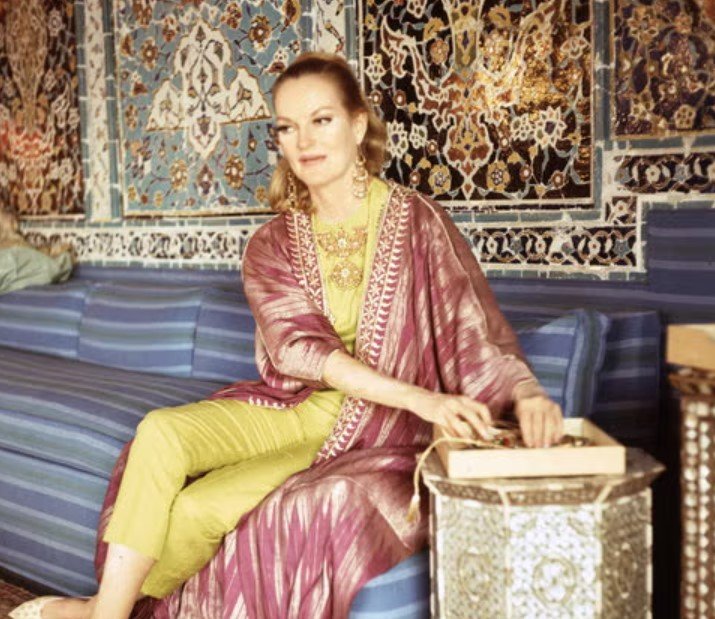
Doris Duke was an American heiress, philanthropist, art collector, and prominent member of one of America’s wealthiest families. Her father, James Buchanan Duke, helped build the American Tobacco Company fortune and established the Duke Endowment, while Doris inherited a substantial fortune that made her one of the richest women in the United States.
Duke also developed interests far beyond business and inheritance. She supported charitable causes, collected art and cultural objects, founded the Newport Restoration Foundation, and maintained homes in several parts of the United States. Her personal life and unconventional interests frequently attracted public attention.
Her connection with Chandi Heffner became particularly significant because Duke had lost her only biological child, Arden, as an infant. Duke’s later decision to adopt Heffner as an adult therefore represented a major personal and legal development in her life.
Why the Adoption Became So Important
The Chandi Heffner story demonstrates how an unusual personal decision can become a complicated legal matter when enormous wealth and decades-old estate documents are involved.
Duke’s adoption of Heffner occurred in 1988, while the trust at the center of the later litigation had been established by James B. Duke in 1924. The gap of more than six decades created a difficult question: could a later adult adoption change who qualified as a descendant under an earlier trust?
The courts ultimately said no for the purposes of that particular trust. That decision became one of the defining legal elements of Heffner’s public story.
Chandi Heffner and Doris Duke’s Legacy
Heffner’s connection to Duke has remained part of the larger story of Doris Duke’s final years. Duke died in October 1993 at age 80, leaving a fortune estimated at roughly $1.2 billion at the time. Much of her estate was directed toward charitable purposes, while her final will excluded Heffner.
The subsequent litigation attracted considerable attention because it involved a billionaire’s fortune, an unusual adult adoption, competing interpretations of old trusts, and disputes surrounding Duke’s final years.
For Heffner, however, the story was not simply about receiving money. Her legal relationship with Duke had begun years before the inheritance battle, and the settlement came only after the personal relationship between the two women had already collapsed.
Chandi Heffner’s Life Beyond Doris Duke
There is no reliable evidence supporting a detailed account of Heffner’s current career, relationships, children, or financial situation. Much of what is available publicly concerns the period between her meeting with Duke in the 1980s and the settlement of the estate dispute in the 1990s.
That lack of later information is itself worth acknowledging. It would be misleading to fill the gaps with claims from unsourced celebrity websites or to assume that the 1995 settlement represents her present-day wealth.
What can be documented is that Heffner moved from a relatively private life in Hawaii into the inner circle of Doris Duke, became her legally adopted daughter, and later became a central figure in one of the most closely watched inheritance disputes connected with Duke’s estate.
Net Worth and Financial Life
A verified current net worth for Chandi Heffner is not publicly available from authoritative sources.
The most firmly documented financial event connected with her is the 1995 settlement. Contemporary reports placed its value at approximately $65 million, after Heffner agreed to drop her claims against the estate and related litigation.
That settlement should not be confused with a current net-worth figure. It does not establish how much money Heffner retained, invested, donated, spent, or otherwise controlled in later decades.
Conclusion
Chandi Heffner’s story stands apart from ordinary celebrity-family profiles because her connection to Doris Duke began with an unusual adult adoption and ended in a major legal dispute over one of America’s most famous fortunes.
Born Charlene Gail Heffner, she spent part of her early adult life in Hawaii before entering Duke’s social and personal circle. Duke legally adopted her in 1988, but the relationship deteriorated by the early 1990s. After Duke’s death, Heffner challenged aspects of the estate arrangements and sought recognition under the older Doris Duke Trust. The courts rejected her claim to be a lineal descendant for purposes of that trust, while a separate settlement eventually ended her broader claims for approximately $65 million.
Much of Heffner’s later life remains outside the reliable public record. What is documented, however, is enough to explain why her name continues to appear in accounts of Doris Duke: she was not merely connected to the heiress through money, but through a legal family relationship that became one of the most unusual chapters in Duke’s complicated personal and financial history.
FAQs
Who is Chandi Heffner?
Chandi Heffner, born Charlene Gail Heffner, is an American woman who became widely known after Doris Duke legally adopted her as an adult in 1988. Their relationship later deteriorated, leading to litigation surrounding Duke’s estate and trusts.
How was Chandi Heffner related to Doris Duke?
Doris Duke legally adopted Chandi Heffner as her adult daughter on November 10, 1988. Heffner was 35 at the time, while Duke was 75.
Why did Chandi Heffner sue over Doris Duke’s estate?
After Duke’s death, Heffner pursued legal claims involving the estate and argued that she was entitled to benefits connected with the Doris Duke Trust. She also pursued a breach-of-contract claim concerning alleged promises made during her relationship with Duke.
Did Chandi Heffner inherit Doris Duke’s entire fortune?
No. Duke’s final will excluded Heffner, and most of Duke’s fortune was directed toward charitable purposes. Heffner eventually settled her claims for approximately $65 million rather than receiving the entire estate.
Did Chandi Heffner win the Doris Duke Trust case?
No. The New Jersey courts ruled that Heffner did not qualify as a lineal descendant under the particular 1924 trust created by James B. Duke. The appellate court affirmed that decision in 1997.
How much money did Chandi Heffner receive?
Contemporary reports put the 1995 settlement at approximately $65 million. Reports described the agreement as resolving her claims against the estate and ending her breach-of-contract litigation.
What is known about Chandi Heffner’s life today?
Reliable public information about Heffner’s life after the 1990s is limited. There is no authoritative public source establishing a current career, relationship status, or current net worth, so those details should not be presented as fact.