
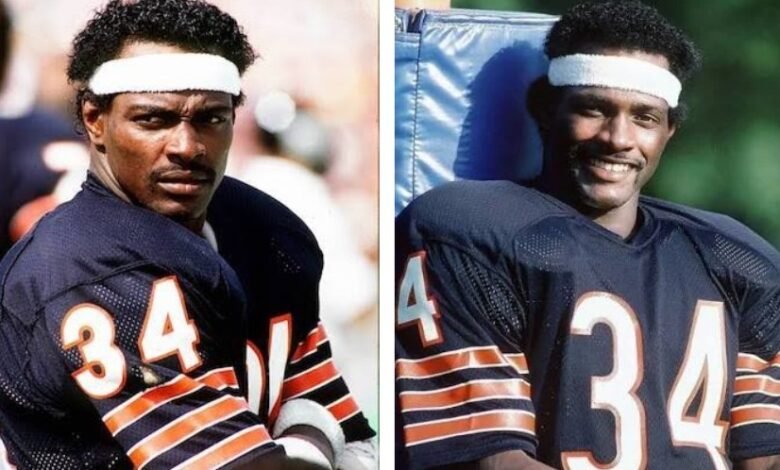
Walter Payton earned a place among American football’s greatest players through extraordinary talent, discipline, and determination. Known to fans as “Sweetness,” he spent his entire 13-season NFL career with the Chicago Bears. His powerful running style, versatility, and remarkable consistency made him one of the most respected athletes of his generation. Payton also became a symbol of excellence beyond the field through his charitable work and commitment to helping others. His achievements included an NFL Most Valuable Player award, a Super Bowl championship, and induction into the Pro Football Hall of Fame. Although he died in 1999, his influence remains visible in the league’s annual Walter Payton NFL Man of the Year Award.
Quick Bio
| Detail | Information |
|---|---|
| Full Name | Walter Jerry Payton |
| Nickname | Sweetness |
| Known For | Legendary American football running back |
| Profession | Professional football player, entrepreneur, philanthropist |
| Birth Date | July 25, 1954 |
| Birthplace | Columbia, Mississippi, United States |
| Nationality | American |
| College | Jackson State University |
| NFL Team | Chicago Bears |
| NFL Career | 1975–1987 |
| Wife | Connie Payton |
| Children | Jarrett Payton and Brittney Payton |
| Hall of Fame | Pro Football Hall of Fame, 1993 |
| Date of Death | November 1, 1999 |
| Age at Death | 45 |
| Nickname Meaning | “Sweetness,” a name associated with his character and playing style |
Who Was Walter Payton?
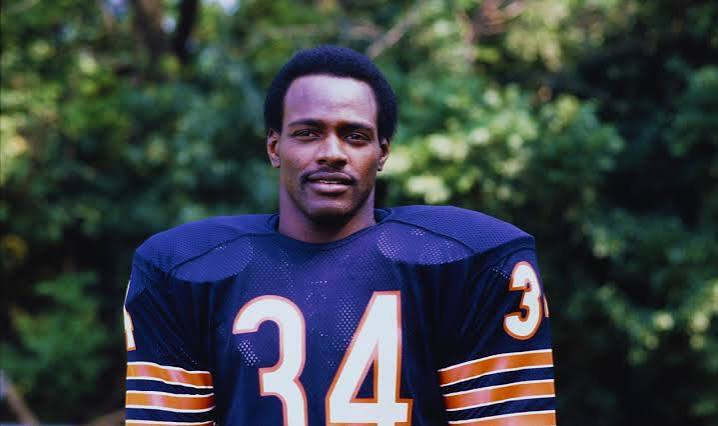
Walter Payton was an American football running back whose career helped define an era of professional football. Born in Columbia, Mississippi, he developed into an exceptional athlete before becoming the Chicago Bears’ fourth overall selection in the 1975 NFL Draft.
Payton did more than run the football. He could catch passes, block defenders, throw when needed, and contribute in several situations. His versatility made him difficult to defend and helped him become one of the most productive players in NFL history.
Fans admired his determination and ability to keep moving through contact. Rather than relying only on speed, he combined balance, strength, footwork, and persistence. His nickname, “Sweetness,” became closely associated with his public identity and the lasting affection supporters felt for him.
Payton’s importance also extended beyond statistics. He represented Jackson State University and historically Black college football on a national stage, helped lead Chicago to a Super Bowl title, and later became a lasting symbol of community service in the NFL.
Walter Payton’s Childhood in Mississippi
Walter Payton was born on July 25, 1954, in Columbia, Mississippi. He grew up in a family environment that valued discipline, responsibility, and hard work. His early years in the small Mississippi community helped shape the determination that later became a defining part of his football career.
Payton attended Columbia High School, where he developed his athletic abilities. Football eventually became his main sporting pursuit, although his interests and talents extended beyond the field. His progress during these years gave him the foundation to compete at the college level.
His hometown remained an important part of his identity even after he became a national sports figure. Payton’s journey from Mississippi to the NFL also helped bring attention to the athletic talent developing at schools and colleges across the American South.
How Jackson State University Shaped His Football Career
Payton attended Jackson State University, where he played for the Tigers from 1971 through 1974. His college career established him as one of the outstanding running backs in the country and brought national attention to the university’s football program.
He finished his Jackson State career with 3,563 rushing yards and 464 points. Those numbers reflected his ability to contribute consistently and score in different ways. He also earned All-American recognition during his college years.
Jackson State played a major role in preparing Payton for professional football. The university gave him an opportunity to develop his skills, compete against strong opponents, and build the confidence needed for the NFL.
His success also carried significance for historically Black colleges and universities. Payton demonstrated that players from HBCU programs could become major professional stars, and his achievements helped strengthen the visibility of Jackson State football.
Walter Payton’s Entry Into the NFL
The Chicago Bears selected Payton with the fourth overall pick in the 1975 NFL Draft. The decision began a professional career that lasted 13 seasons, all with the same franchise.
Payton quickly established himself as a dependable offensive player. He combined speed with physical strength and rarely avoided contact. His running style often required defenders to bring him down through several attempts, while his ability to catch passes made him useful beyond traditional rushing plays.
The Bears relied heavily on him throughout his career. Payton responded with remarkable consistency, becoming the center of the team’s offense and one of the league’s most recognizable players.
He also developed a reputation for durability. His commitment to preparation and his willingness to compete through difficult conditions helped him maintain a high level of performance across many seasons.
Why Walter Payton Earned the Nickname “Sweetness”
The nickname “Sweetness” became one of the most recognizable parts of Payton’s identity. It reflected the contrast between his powerful, physical playing style and the warm personality that teammates, fans, and people around him associated with his character.
On the field, Payton ran with intensity. He could break tackles, change direction quickly, and turn difficult situations into productive plays. His ability to remain balanced while defenders tried to stop him made him especially challenging to contain.
Away from football, his public image included kindness, generosity, and a strong connection with the community. The nickname therefore became more than a reference to his playing style. It helped capture the personality that made him admired by people beyond Chicago.
Walter Payton’s Record-Breaking NFL Career
Payton’s statistics explain why he remains one of the most important running backs in football history. Across 190 regular-season games, he recorded 16,726 rushing yards, 110 rushing touchdowns, and 492 receptions for 4,538 receiving yards.
He also showed unusual versatility. His career included eight touchdown passes, demonstrating that he could contribute in ways beyond carrying or catching the football.
In 1977, Payton delivered one of the finest seasons of his career. He rushed for 1,852 yards and earned the NFL Most Valuable Player award. At the time, he became the youngest player to receive that honor.
His single-game performance against the Minnesota Vikings on November 20, 1977, became another defining achievement. Payton rushed for 275 yards, setting an NFL single-game record that stood for more than two decades.
He finished his career with nine Pro Bowl selections and recognition on the NFL’s All-Decade Teams for both the 1970s and 1980s. These accomplishments established his place among the most complete running backs the league had seen.
Walter Payton and the Chicago Bears’ Super Bowl Victory
One of the most important chapters in Payton’s career came during the 1985 season. The Chicago Bears produced a dominant regular season, finishing with a 15–1 record before advancing through the playoffs.
The team reached Super Bowl XX and defeated the New England Patriots 46–10. The victory gave Chicago its first Super Bowl championship and became one of the most memorable moments in franchise history.
Payton played a major role in the team’s success throughout the season. Although he did not score a touchdown in the Super Bowl itself, his contribution to the Bears’ offense and overall championship campaign remained significant.
The championship strengthened his connection with Chicago supporters. For many fans, Payton represented the heart of the team, and the 1985 season became a defining part of his sporting legacy.
Walter Payton’s Playing Style and Influence on Football
Payton stood out because he combined several skills that made him effective in different offensive situations. He could accelerate through openings, make defenders miss, push through tackles, and catch passes out of the backfield.
His running style required both physical strength and technical control. He often used balance and body movement to stay upright after contact, allowing him to gain extra yards when a defender appeared to have stopped him.
Payton also took preparation seriously. His approach to training and competition helped establish a standard for running backs who wanted to remain productive over a long career.
His influence can still be seen in how coaches and fans evaluate versatile running backs. Rather than judging a player only by rushing totals, Payton’s career demonstrated the value of receiving ability, blocking, durability, and overall contribution to the offense.
Walter Payton’s Family: Wife Connie and Their Children

Away from the football field, Payton built a family life with his wife, Connie Payton. The couple married on July 7, 1976, and raised two children, Jarrett and Brittney.
Connie shared his commitment to community service and family support. Together, they helped establish the Walter and Connie Payton Foundation, which focused on improving the lives of children and supporting people facing difficult circumstances.
Their son, Jarrett Payton, followed his father’s path into football. He played professionally and later developed a career in sports broadcasting and media. Their daughter, Brittney Payton, has also maintained a public connection to her father’s legacy.
Payton’s family became an important part of preserving his memory after his death. Through public appearances, charitable initiatives, and work connected to his name, they have helped keep his contributions visible to later generations.
Walter Payton’s Work Beyond Professional Football
Payton’s interests extended beyond his playing career. He explored business opportunities and became involved in several ventures, including Walter Payton Enterprises, which he established in 1979.
His business activities included interests in areas such as restaurants, contractor supplies, and auto racing. These ventures reflected his desire to build a life outside professional sports and prepare for the years after retirement.
He also devoted time and resources to charitable work. His partnership with Connie in supporting children and families showed that community involvement mattered to him beyond the recognition he received as an athlete.
Payton’s public image therefore developed around more than football. He became known as a sports figure who used his platform to support others and encourage positive change.
Walter Payton’s Health Struggle and Final Years
In February 1999, Payton publicly revealed that he had primary sclerosing cholangitis, a rare disease affecting the bile ducts. His diagnosis brought widespread attention to the condition and to the challenges faced by people living with serious liver disease.
Payton became an advocate for organ donation and used his public profile to encourage awareness. His illness also prompted an outpouring of support from football fans, former teammates, and people across the country.
He died on November 1, 1999, at the age of 45, in South Barrington, Illinois. His death deeply affected the Chicago Bears organization and the wider American football community.
The response to his passing reflected the impact he had made during and after his playing career. Thousands of people gathered to remember him, while tributes from across professional sports recognized both his athletic achievements and his character.
What Is the Walter Payton NFL Man of the Year Award?
One of the clearest signs of Payton’s lasting influence is the NFL award that carries his name. The league renamed its Man of the Year Award in his honor in 1999, recognizing his example of excellence in football and commitment to helping others.
The Walter Payton NFL Man of the Year Award recognizes players who combine strong performance on the field with meaningful community involvement. Each NFL team nominates a player, and the league selects an overall winner.
The award reflects the values associated with Payton’s life. It recognizes that professional athletes can make a difference beyond the stadium through charitable work, leadership, and service.
Its continued place among the NFL’s major honors ensures that new generations of players and fans encounter Payton’s name. The award does more than remember a legendary running back; it connects his legacy with the community work of current players.
Walter Payton’s Hall of Fame Recognition
Payton entered the Pro Football Hall of Fame in 1993, only a few years after retiring. The honor recognized his outstanding career with the Chicago Bears and his influence on professional football.
His achievements also earned him a place in the College Football Hall of Fame in 1996. That recognition highlighted the importance of his years at Jackson State and the impact he made before reaching the NFL.
Payton’s legacy includes numerous records, awards, and team honors. Yet his Hall of Fame status represents something broader: a career that combined elite production, versatility, durability, and an enduring connection with football supporters.
Walter Payton’s Net Worth and Business Interests
Walter Payton earned substantial income through his NFL career, business activities, and public profile. However, a reliable, independently verified figure for his personal net worth at the time of his death is not firmly established in authoritative public sources.
His business interests included Walter Payton Enterprises and ventures in different industries. Those activities show that he pursued opportunities outside football, but company interests and business assets should not be treated as proof of a specific personal net worth.
For that reason, online estimates should be approached cautiously. Without dependable financial records, assigning Payton an exact net worth would create a level of certainty that public evidence does not support.
Why Walter Payton Remains Important to American Football
Payton’s legacy continues because his career represents several qualities that football supporters value: consistency, toughness, versatility, and commitment. His records made him one of the sport’s leading running backs, while his personality helped him connect with people far beyond Chicago.
His impact also reaches beyond professional statistics. His success at Jackson State brought recognition to an HBCU football program, and his work with Connie demonstrated a commitment to charitable causes.
The annual NFL award named after him gives his story a continuing role in the league. Every season, players are recognized for combining athletic achievement with community service, carrying forward a standard that Payton helped establish.
Conclusion
Walter Payton’s story is about much more than a remarkable football career. From his early development in Mississippi and his success at Jackson State to his record-setting seasons with the Chicago Bears, he built a legacy through talent, discipline, and determination.
His 1985 Super Bowl victory, Hall of Fame induction, and historic NFL statistics secured his place among the sport’s greatest players. His family life with Connie and their children, along with his charitable work, also shaped how people remember him.
Payton died in 1999, but his influence remains part of American football. The award that bears his name continues to honor players who serve their communities, ensuring that the values associated with “Sweetness” remain relevant long after his final game.
FAQs
Who was Walter Payton?
Walter Payton was a legendary American football running back who played 13 NFL seasons with the Chicago Bears. Known as “Sweetness,” he became one of the most productive and respected players in league history.
Why was Walter Payton called “Sweetness”?
“Sweetness” became Payton’s famous nickname and reflected the warm public image associated with him. It also created a memorable contrast with his powerful and determined playing style.
When was Walter Payton born?
Walter Payton was born on July 25, 1954, in Columbia, Mississippi. He died on November 1, 1999, at the age of 45.
Which NFL team did Walter Payton play for?
Payton spent his entire NFL career with the Chicago Bears. The team selected him fourth overall in the 1975 NFL Draft, and he played for Chicago from 1975 through 1987.
How many rushing yards did Walter Payton record?
Payton finished his NFL career with 16,726 rushing yards and 110 rushing touchdowns. He also recorded 492 receptions for 4,538 receiving yards.
Did Walter Payton win a Super Bowl?
Yes. Payton helped the Chicago Bears win Super Bowl XX after the 1985 season. Chicago defeated the New England Patriots 46–10 to claim the championship.
Was Walter Payton married and did he have children?
Yes. Walter Payton married Connie Payton in 1976. They had two children, Jarrett and Brittney.
What happened to Walter Payton?
Payton died on November 1, 1999, following complications associated with a rare liver disease called primary sclerosing cholangitis. He was 45 years old.
What is the Walter Payton NFL Man of the Year Award?
The NFL renamed its Man of the Year Award in Payton’s honor in 1999. It recognizes players who demonstrate excellence on the field and make a meaningful contribution to their communities.
What was Walter Payton’s net worth?
A reliable, independently verified figure for Payton’s personal net worth is not publicly established. Although he earned money through football and business ventures, widely circulated online estimates should not be treated as confirmed financial records.
For More Updates Visit: Fortune Magazine