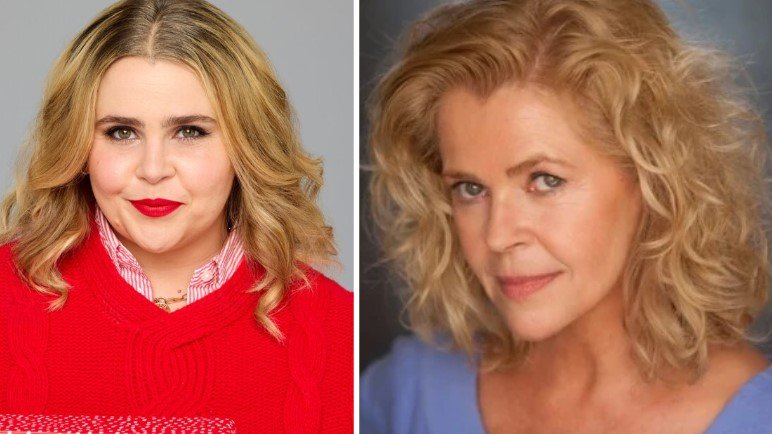
Pat Musick is an American voice actress whose work has contributed to several memorable animated films and television series.
Although she has built a career in entertainment in her own right, she is also widely recognized as the mother of actress Mae Whitman.
Musick’s professional journey includes voice performances in popular productions such as An American Tail, The Smurfs, and Rugrats.
Her experience in voice acting also provides an interesting connection to her daughter’s successful career in film, television, and animation.
Mae has spoken publicly about growing up around her mother’s voice-over work and the supportive environment her parents created.
From her early acting experiences to her family life and professional achievements, Pat Musick has a story that extends beyond being the parent of a famous actress.
Quick Bio
| Detail | Information |
|---|---|
| Full Name | Patricia Anne Musick |
| Known As | Pat Musick |
| Famous For | Voice acting and animation |
| Famous Connection | Mae Whitman |
| Relationship | Mother |
| Profession | Voice actress |
| Birth Date | Conflicting dates appear in entertainment databases; not reliably established |
| Birthplace | St. Louis, Missouri, United States |
| Nationality | American |
| Parents | Donn Musick and Jane Maginnis, according to biographical records |
| Spouse | Jeffrey (Jeff) Whitman |
| Children | Mae Whitman |
| Education | Not reliably documented in authoritative public sources |
| Current/Public Status | Maintains a relatively private public profile; professional credits are documented through her acting career |
Pat Musick’s Early Life and Background
Pat Musick, whose full name is Patricia Anne Musick, comes from St. Louis, Missouri. Although she has spent much of her professional life in the entertainment industry, relatively little detailed information about her childhood and upbringing has been shared publicly.
Her early background is particularly interesting because her career eventually developed in an area of acting that does not always receive the same recognition as traditional screen performances: voice acting. Rather than relying on facial expressions or physical appearances, voice performers use vocal delivery, timing, personality, and emotional expression to bring fictional characters to life.
Musick established herself in this specialized field during the 1980s, building experience across animated television, feature films, and other entertainment productions. Her career eventually became an important part of her public identity, independently of her daughter’s later success.
How Pat Musick Started Her Acting Career
Musick’s professional acting career began in 1981 with a role in the film The Loch Ness Horror. This early screen credit marked the beginning of an entertainment career that would increasingly focus on voice performances.
During the following years, she found opportunities in animated television. Voice acting allowed her to work with different characters and productions, often requiring her to create distinctive personalities through sound alone.
Her work in children’s entertainment became an especially important part of her professional development. She contributed voices to established animated franchises and gradually accumulated credits across several recognizable television programs.
The 1980s were an important period for television animation, with children’s programming offering opportunities for performers who could adapt their voices to different characters. Musick became part of that professional landscape, establishing a career that continued into subsequent decades.
Pat Musick’s Breakthrough With The Smurfs
One of Musick’s recognizable early television contributions came through the animated series The Smurfs. She voiced Snappy Smurfling, a character associated with the franchise’s younger generation of Smurfs.
The series was internationally popular and became one of the defining children’s animated productions of its era. Working on an established franchise gave voice performers the opportunity to reach audiences who might never know their names but would recognize their characters.
Musick’s involvement extended beyond a single isolated performance. Her work on the program helped establish her experience in animation and demonstrated her ability to contribute to character-driven children’s entertainment.
For an actress developing a voice-over career, participating in a widely recognized television property was a meaningful professional achievement. It also helped create a foundation for the additional animated roles she would take on later.
Her Memorable Role as Tony Toponi in An American Tail
One of Pat Musick’s most recognizable performances came in the 1986 animated film An American Tail, directed by Don Bluth.
Musick voiced Tony Toponi, a young Italian mouse who becomes an important companion to the central character, Fievel Mousekewitz. Tony is a confident, streetwise character whose friendship helps Fievel navigate unfamiliar surroundings in the story.
The film follows a family of mice who immigrate to America while searching for a safer life. Its themes of family, migration, friendship, and perseverance helped make it a memorable animated feature for audiences.
Musick’s portrayal of Tony became one of the defining credits of her voice acting career. The character required a recognizable personality and a particular vocal style that distinguished him from the other characters.
She later returned to the role in An American Tail: The Treasure of Manhattan Island (1998) and An American Tail: The Mystery of the Night Monster (1999).
Her connection to Tony Toponi remains an important reason animation enthusiasts search for her professional work. It also illustrates that Musick’s career includes recognizable performances that have nothing to do with her daughter’s celebrity status.
Pat Musick’s Work in Rugrats and Other Animated Productions
Another notable part of Musick’s professional history involves the popular Nickelodeon franchise Rugrats.
She contributed several voices to the original series, including Harold Frumpkin, a character associated with the Pickles family. Her involvement also extended to the follow-up production All Grown Up! and Rugrats: Pre-School Daze.
These projects demonstrate the variety of work available to experienced voice performers. Unlike an actor playing one continuing live-action character, animation performers may contribute multiple voices, sometimes portraying very different personalities within the same production.
Musick also accumulated credits in productions such as Duckman, The Tick, Pinky and the Brain, and The Sylvester & Tweety Mysteries.
Her work across these programs reflects a career built on adaptability. She was not limited to one animation style or one type of character, which allowed her to remain involved in different kinds of productions.
Her Contribution to Extreme Ghostbusters
In 1997, Musick joined another recognizable entertainment franchise through the animated television series Extreme Ghostbusters.
She provided the voice of Janine Melnitz, a character familiar to audiences of the wider Ghostbusters franchise. The animated series introduced a new group of younger ghost hunters while retaining connections to the original Ghostbusters universe.
Musick’s participation gave her another opportunity to work within an established fictional world. Her voice performance contributed to a series that combined supernatural adventures, comedy, and action.
This role is particularly relevant when considering the range of her career. Her filmography includes children’s animation, comedy, adventure, and productions based on well-known entertainment properties.
Other Film and Television Credits
Pat Musick’s professional credits extend well beyond her best-known performances.
Over the years, she has contributed voices to several animated films and television programs, including:
- DuckTales
- The Gummi Bears
- Saber Rider and the Star Sheriffs
- Where’s Waldo?
- Duckman
- The Tick
- Pinky and the Brain
- Cow and Chicken
- Superman: The Animated Series
- Johnny Bravo
- All Grown Up!
- The Life and Times of Juniper Lee
- Avatar: The Last Airbender
- Curious George
- Batman: The Brave and the Bold
- Mr. Peabody & Sherman
She also appeared in live-action productions, including an episode of Beverly Hills, 90210 and an episode of House.
These credits show that Musick’s work was not restricted to one studio, franchise, or generation of animation. Her professional experience covered several decades and different formats of entertainment.
Pat Musick’s Career Beyond Voice Acting
Although voice acting represents the central part of Musick’s professional identity, her credits also include on-screen acting.
Her early appearance in The Loch Ness Horror and later television work demonstrate that she has experience in front of the camera as well as behind the microphone.
Nevertheless, animation remained the more prominent part of her professional career. Voice acting requires a different set of skills from conventional screen performances, including vocal characterization, consistency, timing, and the ability to communicate emotion without relying on physical movement.
Musick’s extensive involvement in animated productions suggests a long-standing commitment to this specialized area of entertainment.
Unlike some performers whose public identities are closely associated with interviews, award ceremonies, or major media appearances, her professional record is primarily represented through the characters she has voiced.
Pat Musick’s Marriage and Family Life
Pat Musick’s personal life has largely remained outside the entertainment industry’s constant public attention.
She is publicly identified as the mother of actress Mae Whitman and has been associated with Jeffrey Whitman, who has worked as a personal manager and set construction coordinator.
The family connection is an important part of Musick’s public biography because Mae grew up with a parent who already understood the demands of working in entertainment.
However, Musick has not made her private family life a major part of her public identity. Detailed information about her marriage, everyday family routines, and personal experiences is limited.
What is more clearly documented is the supportive environment Mae has described when discussing her childhood and her parents’ approach to her early acting career.
Pat Musick and Mae Whitman’s Mother-Daughter Relationship
The relationship between Pat Musick and Mae Whitman is one of the most interesting aspects of Musick’s personal story.
Mae grew up in a household where acting and voice-over work were familiar parts of everyday life. Her mother’s profession introduced her to the entertainment environment from an early age, although that did not mean that becoming an actress was automatically expected of her.
In interviews, Mae has explained that her first opportunity in entertainment came when she accompanied her mother to an audition. While Musick was attending her own audition, young Mae became interested in the possibility of participating in a commercial herself.
The casting team noticed her and offered her an opportunity. Musick initially did not intend to turn the visit into an acting opportunity for her daughter, but Mae was eager to try.
That experience eventually became the beginning of Mae’s professional career.
The story is especially interesting because it shows how an ordinary family experience became an important moment in the development of another successful performer.
How Pat Musick Influenced Mae Whitman’s Interest in Acting
Musick’s profession provided Mae with early exposure to the creative side of entertainment.
Growing up around voice-over work helped her become familiar with recording environments, animated characters, and the professional process behind performances.
Mae has spoken about how her mother’s career influenced her own appreciation of voice acting. In an interview with The A.V. Club, she discussed her mother’s reputation as a voice actor and explained how years of voice performances helped inform her own work.
The connection is particularly meaningful because Mae eventually developed a successful voice acting career of her own.
Rather than simply following her mother’s professional path, she established an independent identity through live-action television, films, and animation. However, the similarities between their careers provide an interesting example of how professional interests can develop across generations.
Musick’s experience also meant that Mae had access to parental guidance from someone familiar with the entertainment business.
The Supportive Parenting Behind Mae Whitman’s Childhood Career
Mae Whitman has publicly credited her parents with helping her navigate the challenges of working as a child actress.
In a 2017 interview about surviving child stardom, Mae spoke positively about how her parents approached her professional opportunities. She described an upbringing in which her personal happiness and everyday experiences remained important.
Her parents did not treat acting as something that had to take priority over everything else. According to Mae, they supported her when she wanted to participate in ordinary childhood activities rather than accept another acting opportunity.
This perspective provides valuable insight into Musick’s role as a mother.
Having professional experience in entertainment did not mean that she pushed her daughter toward constant work. Instead, Mae’s public comments describe parents who considered her preferences and allowed her to develop her interests at her own pace.
That balance is an important part of their family story and helps explain why Mae has spoken appreciatively about her upbringing.
Pat Musick and Mae Whitman’s Shared Connection to Voice Acting
One of the strongest links between Musick and her daughter is their shared involvement in voice acting.
Musick built her career through animated television and films, while Mae gradually became recognized for her own voice performances. Mae has voiced characters in productions such as Avatar: The Last Airbender, Tinker Bell, and The Owl House.
Their professional interests overlap, but their careers developed in different ways. Musick established herself during an earlier generation of television animation, while Mae became part of a newer generation of performers working across streaming platforms, theatrical releases, and television.
In a 2023 interview, Mae discussed her mother’s voice acting experience and explained how her own years of animation work helped her develop as a performer.
This shared professional background makes their relationship particularly interesting. Musick’s career represents an earlier chapter in the family’s entertainment history, while Mae’s achievements demonstrate how that creative environment continued into another generation.
Who Is Mae Whitman?
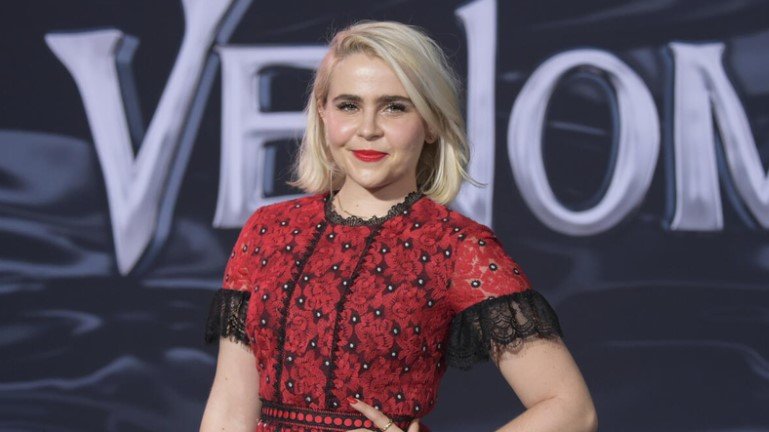
Mae Whitman is an American actress and singer who began working in entertainment as a young child. Born in Los Angeles on June 9, 1988, she is the daughter of Pat Musick and Jeffrey Whitman.
She initially gained attention through childhood film appearances, including When a Man Loves a Woman (1994), Independence Day (1996), One Fine Day (1996), and Hope Floats (1998).
As an adult, Mae developed a successful television career through productions such as Arrested Development, Parenthood, and Good Girls. Her performance as Amber Holt in Parenthood became particularly recognizable among television audiences.
She also established herself in animation, voicing Tinker Bell in Disney’s Tinker Bell films and Amity Blight in The Owl House. Her continued work in animation reflects an interesting connection to her mother’s professional background.
For Pat Musick, Mae’s success is an important part of her family story, but it does not define the entirety of Musick’s own achievements. Both women have developed professional identities through their individual acting careers.
Pat Musick’s Life Away From the Entertainment Spotlight
Despite working in an industry that attracts considerable public attention, Musick has maintained a relatively private personal profile.
Unlike her daughter, who regularly participates in interviews and promotional activities for film and television projects, Musick has generally kept her personal experiences away from extensive media coverage.
This limited public presence means that many details about her everyday life, interests, friendships, and personal activities are not widely documented.
There is also no substantial public record establishing a detailed account of her current daily routine or private commitments.
It is important to distinguish between a lack of public information and an absence of professional activity. Musick’s limited media exposure does not diminish the work she contributed to animation and television over several decades.
Her public story is primarily documented through her acting credits and the occasional discussion of her influence in interviews with her daughter.
What Is Pat Musick Doing Today?
Information about Pat Musick’s most recent professional activities is relatively limited compared with the extensive records available for her earlier acting work.
Her career includes productions spanning the 1980s, 1990s, 2000s, and later years. These credits establish her as an experienced performer with a long history in animated entertainment.
However, there is not enough consistently verified public information to provide a detailed account of her current employment, upcoming projects, or personal schedule.
Musick does not maintain the same level of public visibility as Mae Whitman, whose projects continue to attract entertainment coverage.
For readers interested in her professional history, her earlier animation performances remain the clearest way to understand her contribution to the industry.
Pat Musick’s Net Worth and Financial Life
Pat Musick’s net worth has not been established through reliable, publicly available financial records.
Although various entertainment and celebrity websites may publish estimated figures, these numbers should not automatically be treated as accurate. There is no sufficiently authoritative public information confirming her personal wealth, investments, property holdings, or total earnings.
Musick has worked in television, films, and animation for many years. Such a career can involve income from individual performances and other professional arrangements, but the financial details of her work have not been publicly established.
Her daughter Mae Whitman has developed a separate entertainment career, and Mae’s earnings should not be confused with her mother’s personal finances.
Consequently, Pat Musick’s verified current net worth remains publicly unknown.
Pat Musick’s Professional Legacy in Animation
Musick’s professional legacy is connected to several generations of animated entertainment.
Her performances in The Smurfs, An American Tail, Rugrats, and Extreme Ghostbusters demonstrate the variety of characters and productions she has been involved with.
Voice acting is an important part of the entertainment industry because animated characters often become recognizable to audiences independently of the performers behind them. Musick’s work illustrates this aspect of the profession.
Her contribution is also meaningful from a family perspective. Mae Whitman’s later success in animation and television created an unusual connection between two generations of performers who both developed their careers through voice work.
Although Musick generally keeps her personal life private, her professional credits provide a lasting record of her participation in animated entertainment.
Conclusion
Pat Musick is much more than the mother of actress Mae Whitman. She is an experienced American voice actress whose career includes memorable contributions to An American Tail, The Smurfs, Rugrats, and numerous other animated productions.
Her relationship with Mae adds another meaningful dimension to her story. By introducing her daughter to the entertainment environment while maintaining a supportive approach to childhood, Musick became an important part of Mae’s early journey into acting.
Their shared interest in voice acting makes their family connection particularly distinctive. While Mae established her own identity through successful film and television performances, Pat Musick developed a professional legacy through decades of animation work.
Although many aspects of Musick’s private life remain undocumented, her acting career and influence on her daughter’s early experiences offer a clear understanding of why people continue to take an interest in her story.
FAQs
1. Who is Pat Musick?
Pat Musick is an American voice actress known for her performances in animated films and television series. Her credits include An American Tail, The Smurfs, Rugrats, and Extreme Ghostbusters. She is also the mother of actress Mae Whitman.
2. Is Pat Musick Mae Whitman’s mother?
Yes, Pat Musick is Mae Whitman’s mother. She is a voice actress, while Mae is an actress and singer who has worked in film, television, and animation.
3. What is Pat Musick famous for?
Pat Musick is particularly recognized for voicing Tony Toponi in An American Tail. She has also contributed to The Smurfs, Rugrats, Duckman, and Extreme Ghostbusters.
4. Did Pat Musick influence Mae Whitman’s acting career?
Yes, Musick’s work in voice acting gave Mae early exposure to the entertainment industry. Mae has explained that she accompanied her mother to an audition as a young child, which led to her first professional opportunity.
5. What characters did Pat Musick voice?
Some of her notable characters include Tony Toponi in An American Tail, Snappy Smurfling in The Smurfs, Harold Frumpkin in Rugrats, and Janine Melnitz in Extreme Ghostbusters.
6. Is Pat Musick still working as a voice actress?
Her professional credits extend across several decades, but detailed, independently verified information about her latest projects and current employment is limited.
7. What is Pat Musick’s net worth?
Pat Musick’s verified net worth is not publicly available. Online estimates should be treated cautiously because there is no authoritative financial disclosure establishing her personal wealth.
For More Updates Visit: Fortune Magazine