
Inbound call performance does not always depend on traffic volume or team capacity. In many cases, the issue appears earlier, at the moment the number is displayed on the customer’s screen.
When a call comes from an unfamiliar or international number, response rates drop. This directly affects inbound conversion, especially in sales-driven environments or multi-country operations. The problem is how the business appears at the first point of contact.
A Virtual (DID) Number solves this by aligning external communication with customer expectations while keeping internal call handling unchanged. Calls are received through local or dedicated numbers, while routing and processing remain centralised.
What is a DID number
A Virtual (DID) Number is a virtual inbound number mapped to a VoIP or PBX system. It defines how a call enters the communication structure and links it to routing logic inside the platform.
Multiple numbers can operate within the same system without additional infrastructure. This allows inbound traffic to be structured and controlled without changing the underlying telephony setup.
Direct inward dialing explained
Direct inward dialing separates the public number from internal call handling.
This makes it possible to:
- assign numbers to regions, teams or campaigns
- segment inbound traffic by source
- manage multiple markets within one system
- maintain consistent routing regardless of numbering
Each number becomes part of a structured entry system rather than a standalone contact point.
Technical routing process
A Virtual (DID) Number triggers routing logic rather than processing the call itself. The number defines entry, while the system determines the destination.
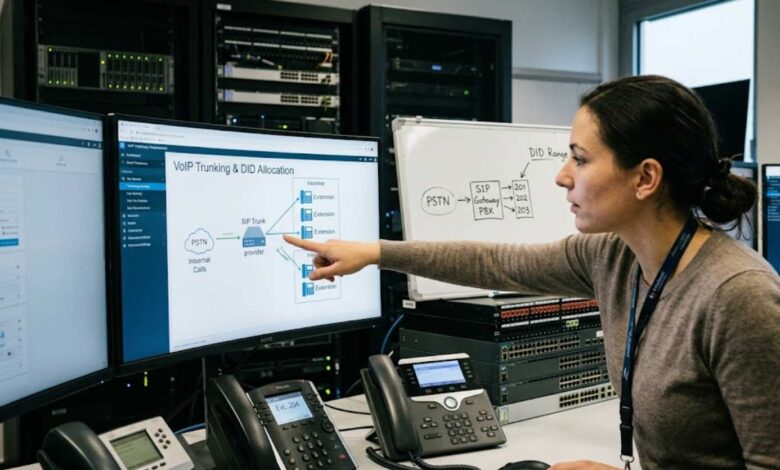
Call flow via SIP and PBX
Typical call flow:
- a user dials a Virtual (DID) Number
- the call reaches the telecom provider
- the call is forwarded via SIP connection
- the PBX system receives the call
- routing rules assign the call to a queue, agent or IVR
Routing logic can be adjusted without changing the number. This allows teams to redistribute traffic depending on workload or business priorities.
In high-volume environments, this structure reduces missed calls and stabilises response times.
DID in cloud environments
Cloud telephony separates numbering, routing and infrastructure. This allows businesses to manage communication across locations without relying on physical systems.
VoIP integration basics
A Virtual (DID) Number integrates directly with cloud PBX and VoIP platforms.
This setup allows:
- centralised control across distributed teams
- connection between telephony and CRM systems
- fast deployment of numbers in new regions
- consistent call handling regardless of location
New numbers can be activated within hours, which is critical when launching campaigns or entering new markets.
Business use cases
A Virtual (DID) Number is used where inbound traffic needs to be tracked, segmented and scaled.
Common use cases include:
- multi-country customer support
- inbound sales operations
- campaign-based call tracking
- market entry without local presence
Local presence strategy
Call response behaviour is strongly influenced by number familiarity. Local numbers are more likely to be answered than international ones.
In practice, companies often see:
- 20–40% higher answer rates with local numbers
- improved first-contact trust
- higher conversion from inbound calls
Local numbers can be connected across multiple regions and routed into a single team without opening local offices. DID Global is used to manage such setups through a single telephony environment.
Marketing teams also assign separate Virtual (DID) Numbers to campaigns. This allows tracking inbound calls by source and reallocating budgets based on actual call performance.
Cost and scalability benefits
Traditional telephony ties numbers to physical infrastructure. Expanding into new regions requires local setup, hardware and ongoing maintenance.
A Virtual (DID) Number removes these dependencies.
Operational impact includes:
- no need for local telecom infrastructure
- no physical lines per number
- flexible scaling of numbers and capacity
- faster market entry without technical delays
Instead of investing in infrastructure, companies focus on traffic, routing and conversion.
In multi-market operations, a Virtual (DID) Number becomes part of the revenue flow. It defines how inbound demand is captured, distributed and converted into actual conversations.