Remote work no longer means working from home all day, every day. For many people in the UK, the modern working week is more fluid than that. A morning might begin at home, continue on a train, shift into a coworking space, pause in a café between meetings and end with a few final emails from a hotel lobby or client site. The laptop may still be the main productivity machine, but the smartphone has become the control centre around it.
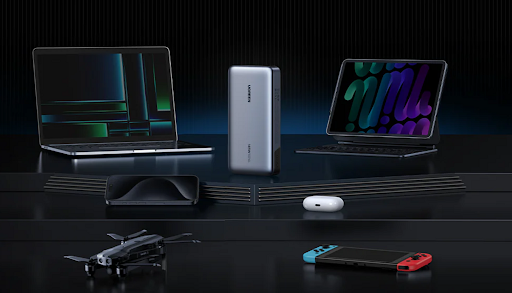
That smartphone handles calendar alerts, two-factor authentication, mobile hotspot, calls, messages, banking, travel apps, digital tickets and last-minute document checks. Add wireless earbuds, a tablet, smartwatch or portable keyboard, and the flexible worker’s bag quickly becomes a small mobile office. The only problem is that mobile work depends on mobile power.
This is why a portable charger is becoming one of the most practical tools in the remote work kit. It is not a flashy upgrade, and it does not promise a dramatic transformation. Instead, it solves one of the most common modern work problems: running out of battery when the day does not go as planned.
A wireless charger also has a role in this new working rhythm, especially for people who want fewer cables at their desk or in temporary workspaces. Together, portable and wireless charging reflect a bigger shift in how people work: less fixed, more distributed and increasingly dependent on devices staying ready throughout the day.
Flexible work has made battery life harder to predict
In a traditional office routine, charging is easy to manage. The desk has a socket, the charger stays in place and the working day follows a relatively predictable structure. Flexible work is different. People move between locations, spend longer away from mains power and rely more heavily on mobile devices during transitions.
A phone that would easily last a normal office day may struggle during a mobile one. Navigation, calls, hotspot use, train tickets, email, video calls, document previews and messaging all eat into battery life. Poor signal on public transport can make the problem worse, as the phone works harder to stay connected. By mid-afternoon, the device that holds the next meeting invite, train route and authentication app may already be under 20 percent.
A portable charger removes some of that uncertainty. It gives flexible workers a backup plan that does not depend on finding a free socket in a café or sitting next to the right seat on a train. The value is not only extra battery. It is control.
The smartphone is now part of workplace infrastructure
It is easy to underestimate the role of the smartphone in professional work because it looks like a personal device. In reality, it has become part of everyday workplace infrastructure. For many users, a phone is needed to approve logins, join calls, check Slack or Teams, access building passes, scan QR codes, pay for travel and tether a laptop when Wi-Fi fails.
That makes battery life a productivity issue. If the phone dies, the laptop may still work, but the workflow can break. A user may lose access to authentication, travel information, contact channels or mobile connectivity. This is especially relevant for freelancers, consultants, sales teams, journalists, students and hybrid workers who cannot always control the environments they work in.
A portable charger acts like a small insurance policy against that disruption. It is one of those accessories that feels unnecessary until the first day it prevents a missed call, failed login or stressful journey home.
Why a wireless charger still belongs in the conversation
A wireless charger may not seem like the obvious solution for a mobile workday, but it plays a useful role in flexible setups. At home, in a coworking space or on a desk used between meetings, wireless charging encourages regular top-ups without cable clutter.
The advantage is behavioural. When charging requires plugging in a cable, people often delay it. When there is a dedicated wireless charging spot, they are more likely to put the phone down and let it regain power throughout the day. For remote workers moving between calls and tasks, that convenience matters.
A wireless charger also helps keep temporary workspaces cleaner. Nobody wants to unpack three cables just to work for an hour in a shared space. A compact wireless charging pad or stand can make the phone easier to keep visible, accessible and charged without turning the desk into a cable mess.
That said, wireless charging is usually best treated as a comfort layer rather than the only charging plan. For true mobility, a portable charger remains the more reliable option.
The grab-and-go work bag is becoming more important
The flexible worker’s bag has evolved. It is no longer just a laptop sleeve and a notebook. A useful everyday kit might include a compact charger, USB-C cable, earbuds, small adapter, power bank, water bottle, travel card, and perhaps a lightweight mouse or foldable stand.
The goal is not to carry more for the sake of it. The goal is to avoid being caught out. A good grab-and-go kit allows people to accept a last-minute meeting, work from a train, stay longer at a coworking space or deal with travel disruption without losing the ability to communicate and work.
Within that kit, the portable charger earns its place because it supports everything else. It keeps the phone alive, can often help with earbuds or tablets, and provides backup power when the day expands beyond the original plan.
What makes a good portable charger for work?
The best work-focused portable charger is not necessarily the biggest one. Capacity is important, but so are size, weight, reliability and ease of use. A charger that is too heavy may stay at home. A charger that is too small may not provide enough reassurance. The right balance depends on how long the user is usually away from mains power.
For typical hybrid workers, a slim charger that can give a phone at least one meaningful top-up may be enough. For people who travel frequently, rely on hotspot use or carry multiple devices, a higher-capacity model makes more sense.
Other details matter too. Clear battery indicators help users know when to recharge the charger itself. USB-C compatibility improves flexibility. Good build quality matters because the charger will be carried in bags, used on trains and handled daily. Safety features are also important, particularly when expensive phones and accessories are involved.
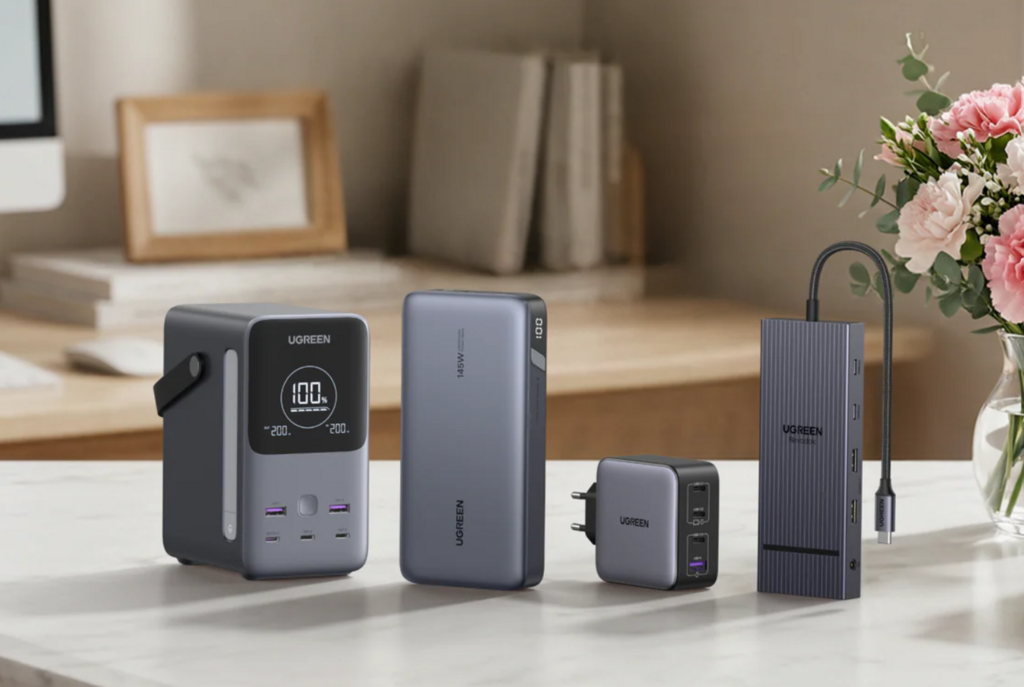
This is where brands such as UGREEN fit naturally into the remote work conversation. The appeal is not just that charging accessories exist, but that well-designed ones can make flexible work less fragile and more predictable.
Charging should reduce friction, not add more
One of the best tests for any work accessory is whether it reduces friction. A bad charging setup creates new decisions: which cable, which socket, which adapter, which device gets priority. A good setup fades into the background.
A portable charger should be easy to pack, easy to use and easy to recharge. A wireless charger should have a natural place on the desk and make top-ups feel effortless. Together, they should support the working day without forcing the user to think constantly about battery levels.
For flexible workers, that is the real point. Charging is not the main event. It is what keeps the main event possible.
Portable power supports better work boundaries too
There is another subtle benefit to having reliable mobile power: it helps people make better choices about where and how they work. If someone knows their phone and accessories can last the day, they are less tied to a specific café table, train seat or office corner with a plug.
That freedom can make remote work feel more intentional. A user can choose the quieter spot, take the longer route home, work outside for an hour or stay in a client meeting without worrying that their phone will die before the next step of the day.
In that sense, a portable charger is not simply about more screen time. It is about reducing dependency on the nearest wall socket.
Conclusion
Flexible work has made power management more important than it used to be. The phone now supports communication, authentication, travel, connectivity and productivity throughout the day. When that phone runs out of battery, the working day can become far more complicated than expected.
A portable charger is one of the simplest ways to make remote work more resilient. It gives users backup power when schedules change, travel runs late or temporary workspaces do not provide easy access to sockets. A wireless charger, meanwhile, adds convenience to desks, coworking spaces and home offices by making regular top-ups easier and cleaner.
For UK workers building a practical grab-and-go kit, charging should no longer be an afterthought. It is part of the infrastructure of modern flexible work — small, easy to overlook, but essential when the day refuses to stay predictable.